The Last Supper
Sometimes things don’t end the way we expect.
Our son Logan graduated from Texas A&M in the university’s final Spring 2026 commencement—7 to 10 P.M. on a Saturday night. Logan and friends made plans to connect with each other afterwards outside the basketball arena; but the crowd was big, family was near, and plans changed. He was disappointed. He was also tired, so he understood. It was a big day at the end of a 19-year season of life, which felt like his entire life. It started with pre-K and ended with a master’s degree.
Logan’s school years were finally completed.

Before the graduation ceremony—with their robes, cords and stoles in place—Logan and two friends had a great text conversation. Logan said something truthful and funny, and his friend replied: “I love you, Logan.” They all chuckled.
Logan’s final pre-graduation chat with good friends in his accounting cohort painted a vivid, sweet picture. His friends love him.

Thanks for joining me as we explore The Last Supper on Choosing Peace. I’d like to focus on the love Jesus showed for his disciples. They thought they were gathering for the annual Passover meal—a very big deal. But it wasn’t just the Passover. We call this particular evening The Last Supper. It was their last supper together before Jesus’ crucifixion, burial and resurrection. Things didn’t end how they expected. Not at all.
The lead-up
Vital things transpired shortly before The Last Supper—the very same week. From the Gospel of Matthew: (1) The high priest, chief priests and elders of the Jewish people plotted to arrest and kill Jesus, who told his disciples that he would be crucified. (2) When a woman poured expensive ointment on his head, Jesus told his disciples that she was preparing his body for burial. And then, (3) Judas Iscariot, one of Jesus’ disciples, went to the chief priests and cut a deal to betray Jesus. They paid him 30 pieces of silver. I always presumed that was a lot of money back then. I was wrong. Read this fascinating, short article from Got Questions: “What is the significance of thirty pieces of silver?” For more, see “How Much Were Judas Iscariot’s Thirty Pieces of Silver Worth?”
A house in the city
This passage from the Gospel of Mark demonstrates the powerful omniscience of our triune God—Father, Son and Holy Spirit.
On the first day of [the feast of] unleavened bread, when they sacrificed the Passover lamb, his disciples asked him, “Where do you want us to go and make ready that you may eat the Passover?” He sent two of his disciples, and said to them, “Go into the city, and there you will meet a man carrying a pitcher of water. Follow him, and wherever he enters in, tell the master of the house, ‘The Teacher says, “Where is my guest room, where I may eat the Passover with my disciples?”’ He will himself show you a large upper room furnished and ready. Make ready for us there.” The disciples went out, and came into the city, and found things as he had said to them, and they prepared the Passover.
Mark 14:12-16, New Heart English Bible

A large upper room, sufficient in size for 13 people, was furnished and ready for Jesus and his disciples for a very important, deeply religious evening. Have you ever had a large, private dining room in your home “furnished and ready” for 13 people you didn’t know? The seating was ready. The tables were ready. The room was clean and good to go. And even though it was the Passover, no one else was using it. How did God do it? How did he communicate the need with the family? Through a vision? A dream? We don’t know the behind-the-scenes details, but we know God did it. And Jesus knew about it. Jesus knew how, when and where his two disciples, Peter and John, would intersect with the man carrying a jar of water. Jesus knew it all—ahead of time. He knew it all.
A house down the street
Last month as I was driving home from some errands, I noticed an estate sale sign at a house down the street. I decided to walk down and check it out. They were selling some lovely antiques. I took photos of the pieces that interested me and told Brandon about them.
Saturday, April 25
Journal entry
We bought two antique pieces at the estate sale four houses down—a corner, wall-mounted bookshelf and a large, glass-front cabinet with shelves and bottom drawers. Some of the glass was broken or missing; hence, the very cheap price for a very large piece. It wasn’t priced when I came on Thursday, so I figured it was sold or not for sale. Brandon asked about it today. Glory, hallelujah! Logan has needed bookshelves for a long time, and here we found two that fit our style/needs perfectly. Wow. TBTG! Brandon can fix the glass.
While Logan and I were on the phone today, he commented that God gives good gifts to his children. I agreed. Little did Logan know that on this very day, God showered him with good gifts. All glory to God!!!
Right time, right place
I didn’t really notice the large piece we ended up buying. It was behind the check-out table and it wasn’t priced. I didn’t even think to ask about it. But Brandon did. And he asked about it on the last day of the estate sale, when everything was 50% off and the estate sale team was highly motivated to move their merchandise—especially large, heavy, broken stuff that most people wouldn’t even consider buying.
Logan had been asking for bookshelves for years, but—I can assure you—good antique bookshelf-like items are very hard to come by, even at estate sales. Antique dealers snatch them up to use as display cases. We looked at estate sales, on Craigslist, and on Facebook Marketplace without success. The Lord knew we needed the right pieces at the right time.
Special gifts
After some mishaps on picking up the two beautiful antique bookshelves, they arrived at our house the week Logan graduated. They were his graduation presents. Right things—long-needed and sought. Right place—down the street. Right time—the week of Logan’s graduation. After Brandon and I replaced the missing and broken glass on the bottom half, Logan and I loaded up the big piece. What a remarkable gift from God. (Hanging and loading the smaller, wall-mounted piece will be our next project.)

The story about Logan’s graduation gifts reminds me of the private, large upper room for The Last Supper. I’ll say it again: “Jesus knew it all—ahead of time. He knew it all.”
An estate sale takes place after someone died. Next, a relative has to locate and hire an estate sale company. It takes time for the estate sale people to organize the items, set up the house, advertise the sale, and get it all done. All these things and many more were required—at the right time and place—for Logan’s graduation gifts to arrive the week of his graduation.
The Holy Spirit’s generosity and foreknowledge are truly magnificent!
Your turn
The large upper room was a gift for Jesus and his disciples. Two antique pieces from an estate sale were gifts for our son Logan. Can you think of a gift—whether it was seemingly ordinary or perhaps extraordinary—that came into your life at just the right time? Was it a place—like the upper room; an item or two—like the antiques; a person or group; an opportunity; or something else? Was it an answer to prayer? Was it an answer to a need or healthy desire that you hadn’t ever prayed about?
Get out your journal or a piece of paper and reflect on this particular gift. What events transpired and/or lives intersected in order for you to receive this gift at just the right time? How did you view the gift when you received it? How do you view it now? How did it impact your life?
Close your eyes and reflect on the things God did to bring the gift into your life. Pray and thank him….

The Last Supper
An important exchange between Jesus and his betrayer, Judas Iscariot, is recorded only in the Gospel of Matthew.
Now when evening had come, he was reclining at the table with the twelve. As they were eating, he said, “Truly I tell you that one of you will betray me.” And they were greatly distressed, and each one began to ask him, “It is not me, is it, Lord?” He answered, “He who dipped his hand with me in the dish, the same will betray me. The Son of Man goes, even as it is written of him, but woe to that man through whom the Son of Man is betrayed. It would be better for that man if he had not been born.” Judas, who betrayed him, answered, “It is not me, is it, Rabbi?” [Jesus] said to him, “You said it.”
Matthew 26:20-25, New Heart English Bible
How interesting for Judas Iscariot to ask the same question the other disciples asked. Or did he? The other disciples called Jesus Lord. Judas Iscariot called him Rabbi, which means teacher. What a seemingly-subtle but vital difference. Eleven disciples revered and served Jesus. One didn’t.
Judas Iscariot already went to the religious leaders, made the deal and accepted the money. Why would he ask: “It is not me, is it?” Of course it was him. True to form, he pretended to blend in with the group, but his heart was elsewhere.
I can relate to that. Before I got saved, I was a pretender.
The betrayer
What do the four gospels in the Bible tell us about Judas Iscariot?

Recorded by John—character
A devil
After Jesus fed the five thousand and walked on the water (see part 2), he described himself as the bread of life. When talking to his 12 disciples shortly thereafter, Jesus revealed this disturbing reality: “One of you is a devil” ~ John 6:70, NHEB. Jesus didn’t say: “One of you will be a devil.” He said, “One of you is a devil.” Also in John, chapter 6: “For Jesus knew from the beginning who… did not believe, and who it was who would betray him” ~ John 6:64b, NHEB.
Jesus knew the truth about Judas Iscariot the whole time.
A thief
On two different occasions shortly before Jesus’ crucifixion, a woman anointed him. One woman is described in Matthew, chapter 26 and Mark, chapter 14. This event took place in Simon the leper’s home. The unnamed woman anointed Jesus’ head. Some of the disciples were indignant and scolded her—asserting that she should’ve sold the extravagant ointment and given the money to the poor. Jesus shut that down immediately and explained that she did something beautiful for him—preparing his body for burial.
In John, chapter 12, we learn that Mary, the sister of Lazarus and Martha, anointed Jesus’ feet the previous week, wiping his feet with her hair. Only one disciple’s response is recorded. Guess who it was.
Then Judas Iscariot, one of his disciples, who would betray him, said, “Why was this ointment not sold for three hundred denarii, and given to the poor?” Now he said this, not because he cared for the poor, but because he was a thief, and having the money box, used to steal what was put into it. But Jesus said, “Leave her alone, that she may keep this for the day of my burial. For you always have the poor with you, but you do not always have me.”
John 12:4-8, New Heart English Bible
Judas Iscariot repeatedly stole money from Jesus, from the disciples—his supposed comrades, and from their ministry. Remember, Jesus described him as “a devil.” And we know that Satan is called “the thief.”
Recorded by Matthew and Mark—empowerment
Jesus gave the 12 disciples, including Judas Iscariot, “authority over unclean spirits, to cast them out, and to heal every disease and every sickness” ~ Matthew 10:1, NHEB. In the Gospel of Mark, we learn that Jesus also sent them out to preach. Yes, Judas Iscariot preached, cast out demons and healed people. We know that not every preacher or spiritual activist loves Jesus. Local megachurch preacher Robert Morris went to prison, as have many others. (Go to Current Events in the index to explore Evil in the Church.)
I’ll say it again: Judas Iscariot preached, cast out demons and healed people. Peaceful Readers, that should make your skin crawl and should keep you awake and aware—with your discernment muscles exercised, flexed and ready everywhere you go. Don’t turn off your brain in church or when you’re watching or listening to a preacher. In fact, fire it up to full power. Listen carefully, discern, and ask the Holy Spirit to reveal the truth to you. Remember, wolves like Judas Iscariot and Robert Morris love hanging out with sheep. We’re their bread and butter.
What else do we need to know about Judas Iscariot, the betrayer?
Recorded by Luke—Satan’s role
Judas Iscariot was a thief and a pretender. He also preached, cast out demons and healed people. Very disturbing. While he walked on the dark side his whole life, there came a time when Satan himself entered into Judas Iscariot, the betrayer. It was time to murder the Son of God, so Satan got directly involved. Assignment #1 couldn’t be relegated to one of his cronies.
Now the feast of unleavened bread, which is called the Passover, drew near. The chief priests and the scribes sought how they might kill [Jesus], for they feared the people. Satan entered into Judas, who was called Iscariot…. He went away, and talked with the chief priests and captains about how he might deliver him to them. They were glad, and agreed to give him money. He consented, and sought an opportunity to deliver him to them in the absence of the crowd.
The day of unleavened bread came, on which the Passover lamb must be sacrificed.
Luke 22:1-7, New Heart English Bible
(Satan also entered Judas Iscariot right before he left The Last Supper.)
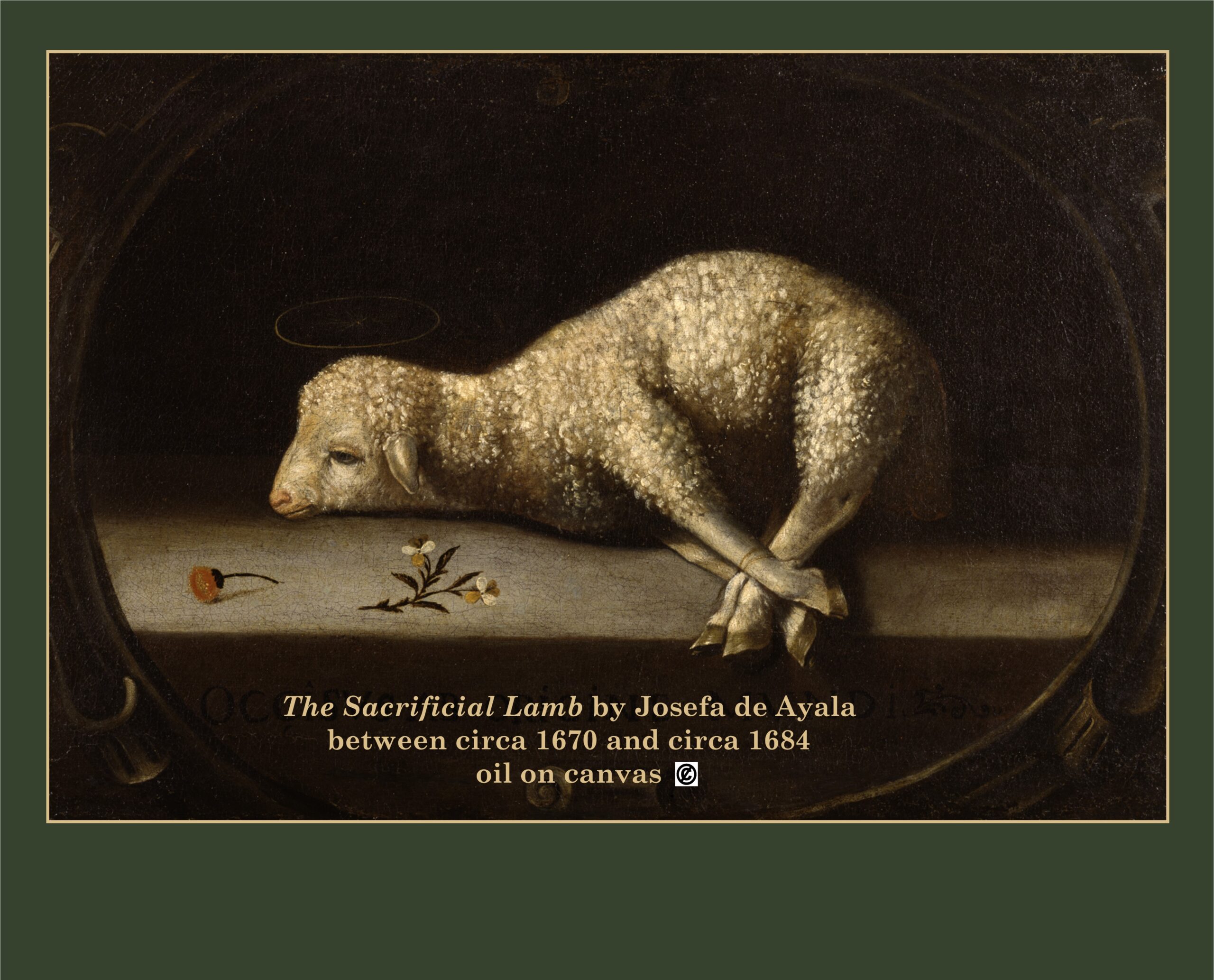
Jesus is our Passover lamb—our pure, spotless Savior.

The Lord’s Supper
On this pivotal evening, during The Last Supper, Jesus instituted The Lord’s Supper, also called communion and the Eucharist.
He said to them, “I have earnestly desired to eat this Passover with you before I suffer….” He received a cup, and when he had given thanks, he said, “Take this, and share it among yourselves….” He took bread, and when he had given thanks, he broke it, and gave to them, saying, “This is my body which is given for you. Do this in remembrance of me.” Likewise, he took the cup after they had eaten, saying, “This cup is the new covenant in my blood, which is poured out for you. But look, the hand of him who betrays me is with me on the table. The Son of Man indeed goes, as it has been determined, but woe to that man through whom he is betrayed.”
Luke 22:15, 17, 19-22, New Heart English Bible
Jesus spoke about his betrayer right after demonstrating and instituting The Lord’s Supper. We don’t generally think about that reality because we stop reading before that part. We focus on the command about The Lord’s Supper:
“Do this in remembrance of me.”
For those of you who sang in a church youth choir in the 1970s, you probably performed the musical Celebrate Life! Even though I was a pretender at the time, important seeds were planted, and I never forgot the beautiful song we sang: “In Remembrance.” I hope it blesses you today.
(For my salvation story, read part 1 and part 2 of The Post-Trauma Transformation.)
The love of Jesus
John recorded The Last Supper in great detail. He was Jesus’ best friend, called “the disciple whom Jesus loved” (John 21:20, KJV). The important scene below was only recorded in John’s gospel.
Washing the disciples’ feet
Now before the feast of the Passover, Jesus, knowing that his time had come that he would depart from this world to the Father, having loved his own who were in the world, he loved them to the end. And during the meal, the devil had already put into the heart of Judas Iscariot, Simon’s son, to betray him…. [Jesus] arose from the meal, and removed his outer garments. He took a towel, and wrapped a towel around his waist. Then he poured water into the basin, and began to wash the disciples’ feet, and to wipe them with the towel that was wrapped around him.
John 13:1-2, 4-5, New Heart English Bible
After Peter objected and was corrected by Jesus, the scene continues.
So when he had washed their feet, put his outer garment back on, and sat down again, he said to them, “Do you know what I have done to you? …For I have given you an example, that you also should do as I have done to you….”
John 13:12, 15, New Heart English Bible
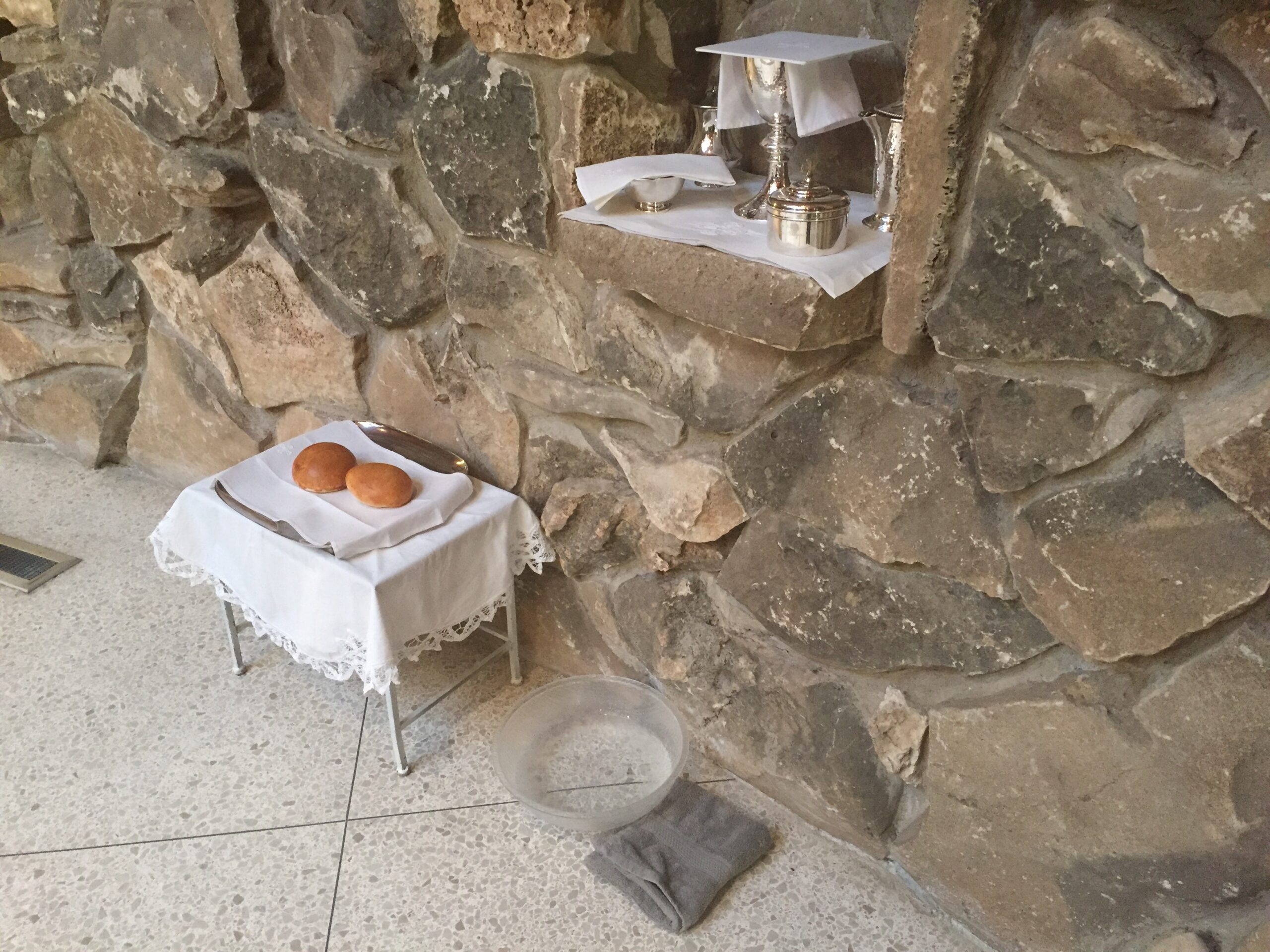
In washing the disciples’ feet—including the feet of Judas Iscariot—Jesus wasn’t talking about his love, he was showing his love in a humble, tangible, servant-like way.
…having loved his own who were in the world, he loved them to the end.
John 13:1c, New Heart English Bible
Has the Holy Spirit asked you to serve someone in a humble, tangible, servant-like way? Did you—or will you—obey him?
The warnings
Jesus warned his disciples multiple times during The Last Supper that something serious was going on.
♦ John 13:10-11 ~ Someone here is unclean.
♦ John 13:18-19 ~ Someone here is against me.
♦ John 13:21 ~ Someone here will betray me.
♦ John 13:33 ~ I’m leaving soon.
John was sitting next to Jesus. Peter asked John to find out which one of them was the betrayer.
Jesus therefore answered, “It is he to whom I will give this piece of bread when I have dipped it.” So when he had dipped the piece of bread, he gave it to Judas, the son of Simon Iscariot. After the piece of bread, then Satan entered into him. Then Jesus said to him, “What you do, do quickly.”
John 13:26-27, New Heart English Bible
And Judas left immediately.
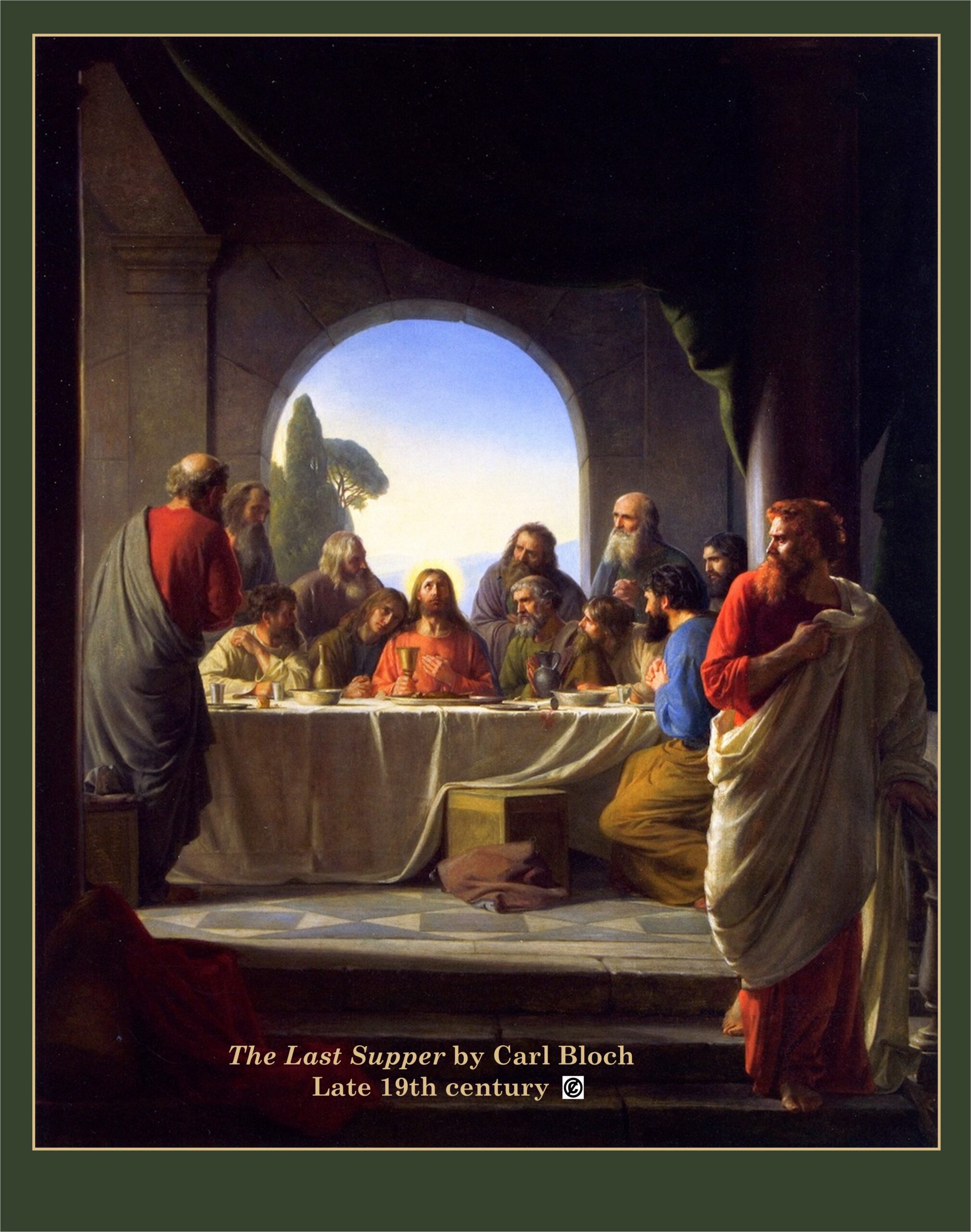
Why did Jesus warn his disciples in different ways? Unclean. Against me—ready to stomp on me. Betrayer. I’m leaving. He was trying to break through the shock factor. They couldn’t believe that one of them would betray him. Like any good parent who knows something really hard is coming, Jesus prepared them in multiple ways. Different phrases and word pictures helped to break through the fog and the cognitive dissonance in their minds, especially afterwards.
The foot-washing and the warnings demonstrated Jesus’ love.
Closing words of love
After Judas Iscariot left, Jesus spoke to his true disciples—the ones who revered him as Lord.
A new commandment I give to you, that you love one another. Just as I have loved you, you also must love one another. By this everyone will know that you are my disciples, if you have love for one another.”
John 13:34-35, New Heart English Bible
The aftermath
Matthew and Mark tell us that they sang a hymn and then went to the Mount of Olives, where Jesus said Peter would deny him three times before the rooster crowed, and where Jesus prayed earnestly.
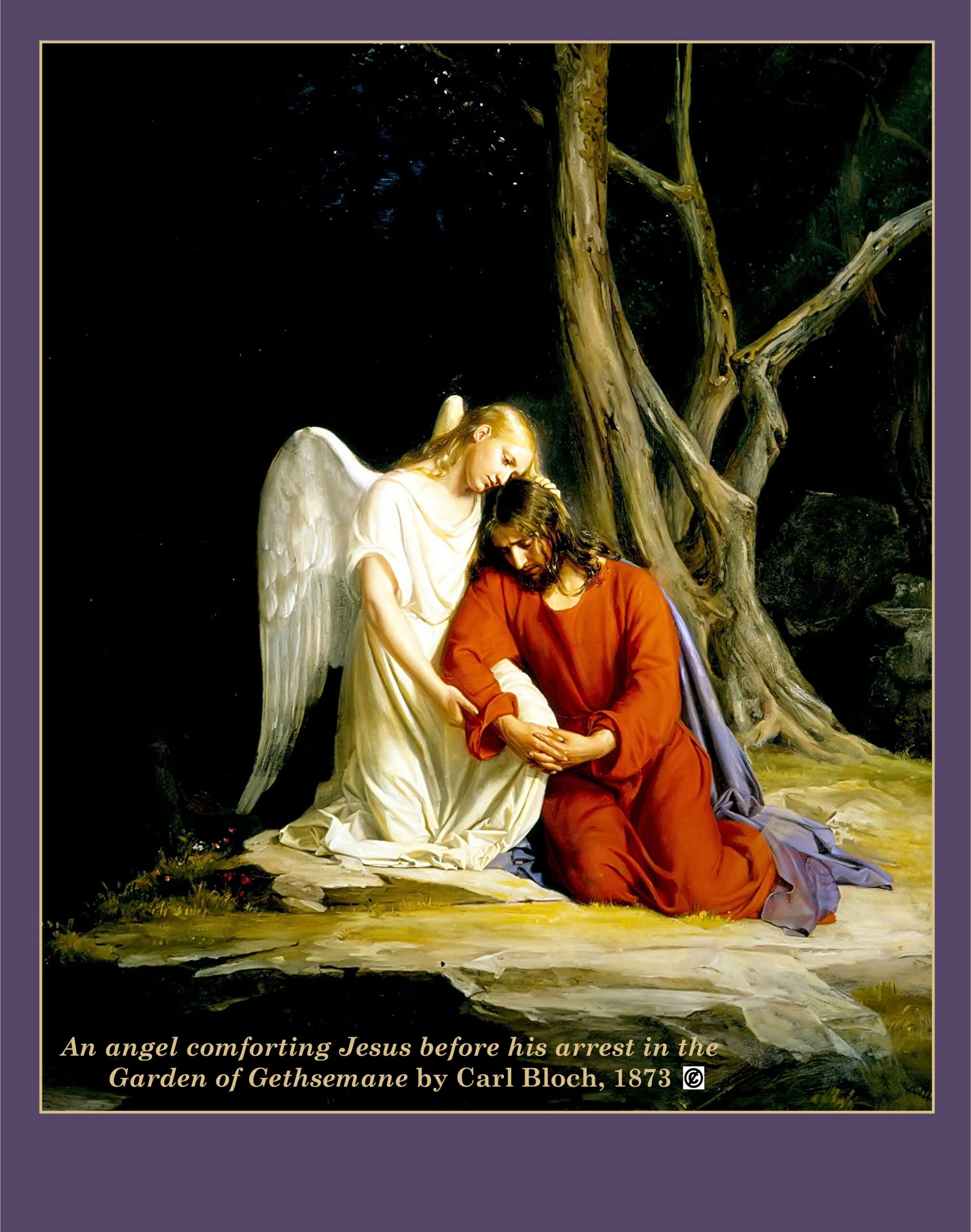
An angel from heaven appeared to him, strengthening him.
Being in agony, he prayed more earnestly.
His sweat became like great drops
of blood falling down on the ground.
Luke 22:43-44, World English Bible
Then Jesus was betrayed and arrested.
The disciples didn’t know that this particular Passover meal on a Thursday evening was actually The Last Supper. They had no idea. Less than 24 hours later, on what we call Good Friday, Jesus was violently murdered by Roman crucifixion and was buried.
But that, Peaceful Readers, wasn’t the end of the story—the most important story of all time.
On Sunday, God raised Jesus from the dead, and he was seen by many people. (To explore one of these encounters, read part 1 about Supper at Emmaus.)
Christians serve a risen Savior—Jesus Christ, our Lord.
Coming next
Honestly, I have no idea what’s coming next. We’ll be surprised together.
Until then, thanks for reading and for Choosing Peace.
Closing word and song
“We Receive” by Sovereign Grace Music
More
To stay current on recent posts, sign up for my monthly newsletter.