Abraham and Sarah—hard times
Last time on Choosing Peace, we looked at Abraham and Sarah—the only couple commended in The Hall of Faith, found in Hebrews, chapter 11 in the Bible. Entire books have been written about Abraham and Sarah. There’s so much to explore. In part 2, we focused on their faith and the wonderful commendations about them in The Hall of Faith, plus some basics about marriage, like this:
During hard times, we have the opportunity to come closer to God and to each other as husband and wife. But—let’s face it: Sometimes, we blow it. Abraham and Sarah provide colorful examples in that department.
In today’s follow-up post, we’ll cover some of their hard times—the glaring missteps: Wife vs. Sister, The Big Lie, and Hagar and Ishmael. I’ll continue featuring photos from two weddings we attended 12 years ago, like I did in part 2—one backyard wedding and one church wedding. I hope they bless you.
Get ready to read about a secret handshake, duplicated drama, and A Time of Peace.


Wife vs. sister
Are you sitting down? Abraham and Sarah were half-brother and half-sister. They had the same father. While this fact is very disturbing to us today, the first paragraph of the article “Who was Sarah in the Bible?” explains why this reality was commonplace at the time—with family clusters staying together in close-knit tribes.
Timing and the purity laws
According to this Bible timeline, Abraham and Sarah went to Egypt in 2091 BC. Roughly 650 years later, in 1445 BC, God gave the people of Israel purity laws about incest and sexual relations, spoken through Moses—and the Lord was not messing around. After listing the “You shall not” depravities, the Lord said:
“Do not defile yourselves in any of these things: for in all these the nations which I am casting out before you were defiled…. For whoever shall do any of these abominations, even the souls that do them shall be cut off from among their people…. I am the LORD your God.”
Leviticus 18:24, 29, 30c, New Heart English Bible
Did you catch that part about souls? Sexual immorality was so despicable that offenders would be banished—body and soul—from their people. (We receive forgiveness for sin, including sexual sins, through the atoning blood of our Savior, Jesus Christ.)
Changing times
The purity laws weren’t instituted because God “learned the ropes” from people’s past behavior. The society had grown—exponentially. Marrying close relatives was no longer required in order to choose a wife from your people—someone who worshiped the one true God. Sexual contact with a sister or half-sister was now strictly forbidden. So was marrying two sisters—making one sister a “rival wife” to her sister (a la Leah and Rachel, Jacob’s two wives in Genesis).
What was necessary once upon a time—fully understood
and sanctioned by our holy God—was now strictly forbidden.
I understand that. What was once a very small population became a large nation.
Given the time in which they lived, Abraham and Sarah were not guilty of depravity, nor did they commit an abomination by marrying each other. Their marriage was permitted and blessed by God.

The big lie
Why are we exploring this stuff? Because twice in Abraham and Sarah’s marriage, Abraham passed Sarah off as his sister—failing to mention that she was, in fact, his wife. When they left their people and began sojourning to Canaan, Abraham actually made Sarah agree to a pact between them that she would introduce herself to people as his sister. Excuse me?
I know it’s tempting to say: “How could Abraham do that?” But then we have to remember when we’ve spoken rashly, without thinking something through first. Was Abraham repeating what others were saying, without considering the consequences? If so—when the rubber meets the road, as they say—we’ve all done that.
I’m just thinking out loud here. Did Abraham and Sarah have a secret handshake? Or a special hand signal? An agreed-upon facial expression? “She just told so-and-so that I’m her brother. Got it.”
Pharaoh
When Abraham and Sarah were in Egypt due to famine, the extremely beautiful Sarah was noticed by nobles and was taken into Pharaoh’s house. The Bible doesn’t clarify whether or not Pharaoh had sex with her, but it’s certainly possible. When a king has a beautiful new wife—or so he thinks—certain activities take place. Pharaoh said: “I took her to be my wife” (Genesis 12:19b, NHEB).
Thankfully, the Lord afflicted Pharaoh and his house with severe plagues because of Sarah. Pharaoh summoned Abraham, and basically said: “Dude! What in the world have you done to me? Why didn’t you tell me Sarah was your wife? Take her and get out of here.”
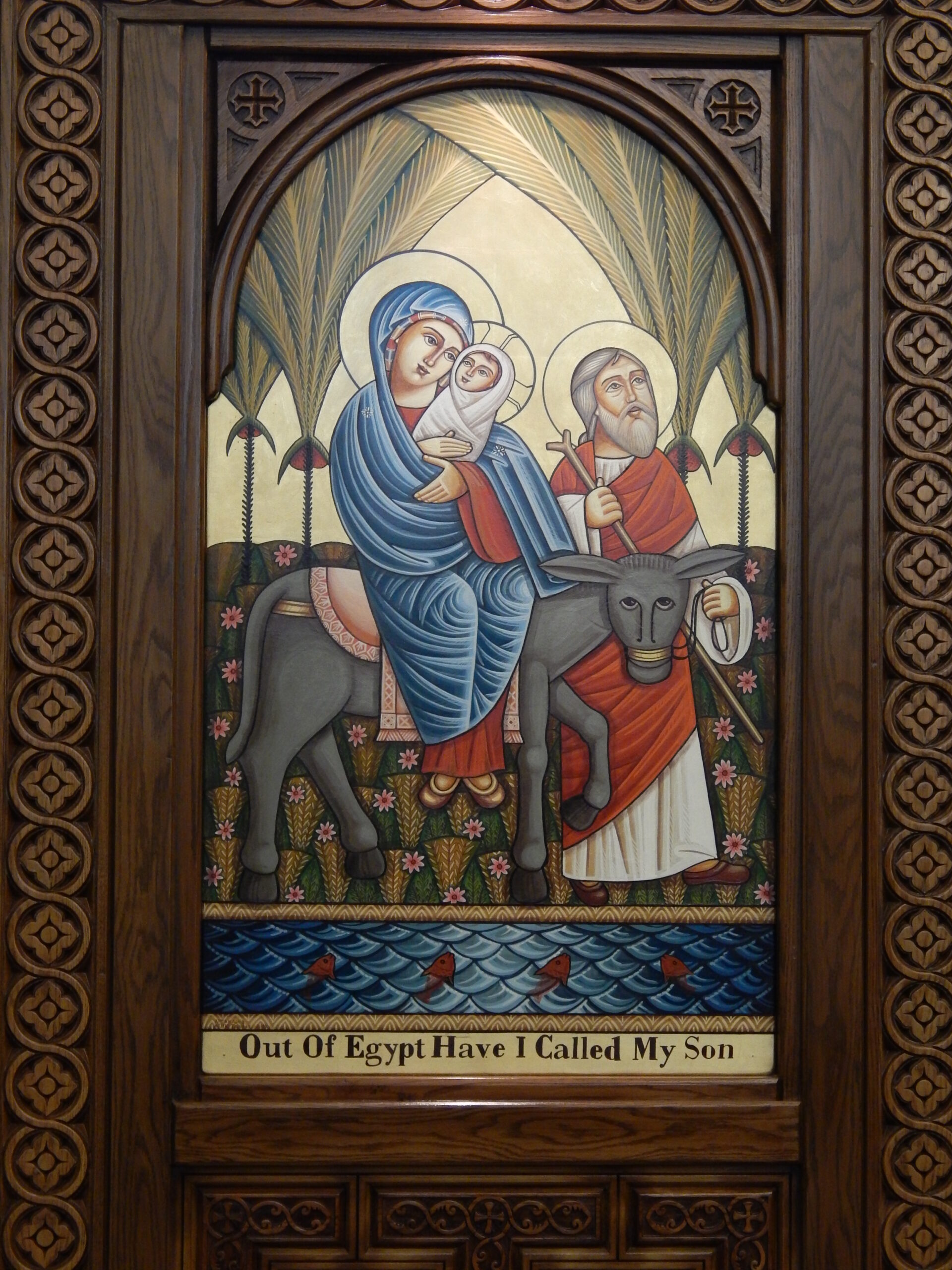

Abraham lied by omission. Big-time. Yes, Sarah was his half-sister. But—much more significantly—she was his wife.
King Abimelech
We learn about She’s My Sister 2.0 in chapter 20 regarding Abimelech, the king of Gerar. And God took care of business.
But God came to Abimelech in a dream…, and said to him, “Look, you are a dead man, because of the woman whom you have taken. For she is a man’s wife.” Now Abimelech had not come near her. He said, “Lord, will you kill even a righteous nation? Did not he tell me, ‘She is my sister?’ She, even she herself, said, ‘He is my brother.’ In the integrity of my heart and the innocence of my hands have I done this.” God said to him in the dream, “Yes, I know that in the integrity of your heart you have done this, and I also withheld you from sinning against me. Therefore I did not allow you to touch her. Now therefore, restore the man’s wife. For he is a prophet, and he will pray for you, and you will live. If you do not restore her, know for sure that you will die, you, and all who are yours.”
Genesis 20:3-7, New Heart English Bible
I like how God says things. “You are a dead man.” Obviously, Abimelech back-pedaled out of this impending disaster and gave Sarah back. Check out Genesis, chapter 20 for more details. It’s most interesting.
What did Sarah think about all this mess? We don’t know. Was this a common occurrence back then?
Repeated history
This next part will shock you. Abraham and Sarah’s son Isaac did the exact same thing to his wife Rebekah—introducing her as his sister—and the same king, Abimelech of the Philistines, discovered the truth and confronted Isaac. Can you believe that? See Genesis 26:6-11.
What are the possible explanations for this duplicated drama? Did Isaac learn this behavior from his parents or was there really a high risk of men being murdered so kings could take their gorgeous wives? Honestly, I’m inclined to believe the reality of the threat. Don’t get me wrong: I’m not making excuses for Abraham or Isaac.
Was deception truly the best choice? Some people would say yes—and that’s perfectly valid. I, personally, would say no.
Fear vs. faith
God intervened powerfully in both situations—when Sarah was taken by Pharaoh and when she was taken by Abimelech. Pharaoh got plagues and Abimelech got a nightmare—I mean a dream where God said: “You are a dead man!” Obviously, God was not okay with Sarah becoming someone else’s wife. At all. The Lord took supernatural steps to protect Sarah.
Couldn’t he have done the same thing if Abraham’s life was threatened? Absolutely. And that, for me, is what makes Abraham’s decisions a problem. Abraham acted out of fear, not faith. God Almighty, the Creator of heaven and earth, can and does protect his people. Abraham’s problems weren’t too big for God to handle.
For encouragement about God’s protection, explore Protected by God in the index.
The call and the promises
Besides, when God called Abraham and Sarah into the unknown, he promised to make Abraham into “a great nation.”
God is not a liar. If he says something will happen: It. Will. Happen.
Did Abraham forget what the Lord told him? Did he decide to take matters into his own hands? Did someone give him bad advice? Were groups of people pressuring him? Remember from part 2—Abraham led a massive group of people, including more than 300 men who served as his military force, who were born to his servants.
Choosing fear instead of faith can get us in serious trouble.
What else was wrong with Abraham allowing a king to take his wife?
Failure to protect
A husband’s two primary responsibilities are to protect and provide. Putting his wife in harm’s way by sending her into another man’s castle—beautiful, alone and supposedly unattached—was reckless, to say the least. Abraham was more interested in protecting himself than in protecting his wife. He forced his wife into potentially adulterous and dangerous circumstances to protect himself. Not okay.

Strangers
We can hope that Pharaoh was busy or was planning his wedding to Sarah and that nothing happened between them, but we don’t know for sure. The whole thing was a disaster. Sarah was surrounded by strangers who worshiped different gods and had different ways of life. The food was different. The clothes were different. The language was different.
Sarah was supposed to be thrilled to be picked by the king—twice. Can you imagine Sarah’s fear? Her circumstances? Her dread?
The others
What about the kings’ other wives and concubines? Were they excited to welcome a stranger to the palace—The Foreign Flavor of the Month? Not in the least. When women are jealous and/or angry, how do they treat the newcomer? The competition? The outsider? Very badly.
Peaceful Reader, have you experienced mean girls? If you have, you know what I’m talking about—and you have my sympathy.
Both times, with both kings—Pharaoh and Abimelech—God saved Abraham’s bacon—and Sarah’s. All glory to God.

Impact
Whether or not this scenario was a common occurrence back then, it was not okay. How did these serious incidents impact Abraham and Sarah’s marriage? Did Abraham ever express remorse? At some point, did he rescind his pact with Sarah? The Tell-Everybody-You’re-My-Sister Pact? Abraham certainly didn’t learn his lesson the first time. Then again, neither have we—in many areas.
While it may sound strange, God can use people’s sin to build faith. Did Sarah’s faith skyrocket due to the Lord’s obvious protection of her? Did Abraham’s faith deepen?
We know that all things work together
for good for those who love God,
for those who are called according to his purpose.
Romans 8:28, World English Bible
We can trust that God did something valuable with this unusual portion of Abraham and Sarah’s story. We can absolutely trust the Lord Almighty for that.

Your turn
What about you? Can you think of a time when God took someone’s sin—whether it was yours or someone else’s—and used it for your good? Was it for your wisdom, understanding or compassion? Was it to show his love, protection or power? Was it to build your courage or another virtue? Did God use someone’s sin to impact your salvation? Or something else?
Get out your journal or a piece of paper and reflect on how God made something strong or beautiful out of something sinful. Our God is in the transformation business—to be sure.
For more, see Virtues and Salvation in the index.
Seeking and finding peace
In a post written six years ago, I dug into two dreams—one about my mom and one about my dad. What did the dreams mean? What truths did they reveal? Here’s a little snippet:
When I looked at The Big Picture—asking the hard questions (why, why, why?)—God was faithful to answer them all. The truth gave me a great sense of peace. Peace about who I am.
The important Bible verse above, Romans 8:28, shines brightly in that post. God worked all things for my good.
Have you had any strange, confusing or scary dreams? Explore the posts under Dreams in the index. Learn about symbolism in dreams, how to know which dreams are from God and which ones aren’t, the potential value of nightmares, and much more.
[For] God is not a God of confusion, but of peace.
1 Corinthians 14:33a, New Heart English Bible

Hagar and Ishmael
Sarah’s servant, Hagar, was the mother of Abraham’s first-born son, Ishmael.
Polygamy—or not
This particular part of Abraham and Sarah’s story bothers many people. I certainly understand why.
Apparently, societal norms changed between the Old Testament and the New Testament, where the issue of having one wife is concerned. The books of 1 Timothy and Titus include standards for church deacons and/or elders: A man “above reproach,” described as “the husband of one wife.”
God’s design—one man and one woman
We must remember that God created marriage when he created Adam and Eve. God didn’t create Adam and a harem—Eve, Susie, Janet, Penelope, Mimi, Gertrude, Fran, Harriet, Barbara and Lanette. God could’ve jump-started the “be fruitful and multiply” command, but he didn’t. God knew that polygamy equals conflict. A big, guaranteed mess. And it fractures trust. Polygamy is divisive and destructive. It is sinful.
God designed marriage between one man and one woman.
Therefore a man will leave his father and his mother, and will join with his wife, and the two will become one flesh. And they were both naked, the man and his wife, and were not ashamed.
Genesis 2:24-25, New Heart English Bible
Perceived benefits and prolonged costs
The next two questions may seem really odd, but let’s dive in anyway.
In Abraham and Sarah’s day, what were the perceived benefits of multiple wives/concubines? In an agrarian or herding/ranching society, larger families provided more laborers—plus more protection from raiders or wild animals. Sons could serve as shepherds or night watchmen.
What were the costs or negatives? More people to house, clothe and feed. More people to manage. And—the biggie…. More conflict—especially between the various wives and concubines. Jealousy. Gossip. Troublemaking. Deal-making. Us vs. Them.
We see a lot of conflict in the story of sisters Leah and Rachel who married Jacob, Abraham’s grandson. We also see significant conflict from polygamy in Abraham and Sarah’s story.
Deal-making
Ten years after God spoke his covenant with Abraham—to make him into a great nation—Abraham and Sarah still had no children. Unfortunately, Sarah decided to take matters into her own hands—and Abraham participated. This sinful situation reminds me of Adam and Eve, the serpent and the apple—the fall of mankind.
(These events took place before God changed Abraham and Sarah’s names. At this time, Abraham was known as Abram and Sarah was known as Sarai.)
Now Sarai, Abram’s wife, bore him no children, but she had an Egyptian servant whose name was Hagar. Sarai said to Abram, “Look now, God has prevented me from bearing. Please go in to my servant. It may be that I will obtain children by her.” Abram listened to the voice of Sarai. So Sarai, Abram’s wife, took Hagar the Egyptian, her servant, after Abram had lived ten years in the land of Canaan, and gave her to Abram her husband to be his wife. He slept with Hagar, and she conceived.
Genesis 16:1-4a, New Heart English Bible
Wifely status—or not
Did Abraham and Hagar really become husband and wife? Yes in some ways, and no in others. For some fascinating details, I highly recommend these articles:
1. “Who was Hagar in the Bible?”
2. “Was Hagar Abraham’s wife or his concubine?”
3. “What is a concubine?”
If you only read one article, read the first one—especially the last three paragraphs. It reveals the long-term impact of this scenario. Hagar’s son, Ishmael, was the father of the Arabic nation, Mohammed and Islam—causing many centuries of war, chaos and bloodshed.
In the second article, we learn the difference between a wife and “a slave wife”—or concubine.
Hagar was not an equal to Sarah.
The third article explains the different rights and roles of concubines. Most women at that time were illiterate and didn’t have job skills, so unmarried women without male relatives willing to take care of them were extremely vulnerable. The role of concubine protected vulnerable women from prostitution, homelessness and death.

Conflict, consequences and the Lord’s intervention
Let’s look at the next segment of this story.
When [Hagar] saw that she had conceived, her mistress was despised in her eyes. Sarai said to Abram, “This wrong is your fault. I gave my servant to your embrace, and when she saw that she had conceived, she despised me. God judge between me and you.” But Abram said to Sarai, “Look, your servant is in your hand. Do to her whatever is good in your sight.” Sarai dealt harshly with her, so [Hagar] fled from her presence.
Genesis 16:4b-6, New Heart English Bible
After Hagar ran away, an angel of the Lord told her to return to Sarah—and to submit to Sarah’s authority. The angel told Hagar that she would have abundant descendants and that she was to name her son Ishmael “because God has heard your affliction” (Genesis 16:11c, NHEB). Hagar obeyed and returned to Sarah.
Unpacking the drama
Hostility—Hagar
When Hagar realized that she was pregnant, she despised Sarah. Did Hagar consider herself superior to Sarah, who was barren? Did she resent the whole situation? Was she angry about her “secondary wife” status?
Yes—Hagar despised Sarah. I believe the anger and hatred went both ways. Welcome to Polygamy 101.
Blame and combativeness—Sarah
As soon as Hagar’s hatred of Sarah was obvious, Sarah got all over Abraham. “This wrong is your fault…. God judge between me and you” (v. 5a, d). That sounds like a boxing ring throw down. “It’s me against you, pal.”
Sarah asked Abraham to have sex with her servant—I mean slave. When he did what Sarah wanted—and it was successful—conflict erupted between the two women. Sarah blamed Abraham for the disaster that she herself had concocted and requested. Most interesting.
Stepping out of the ring—Abraham
Understandably, Abraham was in a no-win situation at this point. He went along with a seriously-bad idea, and couldn’t escape from the fall-out. Abraham basically replied to Sarah’s tantrum: “Woman, Hagar belongs to you. Do whatever you want.”
After Abraham stepped out of the proverbial boxing ring, Hagar stepped in it. Sarah was mean to Hagar—with what I suspect was a fairly swift knockout punch—so Hagar ran away. The angel of the Lord told Hagar to return and behave herself.

Sarah’s regret
What a catastrophic mess from the very beginning. Sarah thought she had such a great idea until the reality literally clobbered her.
Sarah’s polite, dare-I-say friendly request of her husband: “Please go in to my servant” (v. 2b) turned into “I gave my servant to your embrace” (v. 5b). That sounds like Buyer’s Remorse to me. What Sarah thought was so smart and creative and flexible and understanding beforehand became really uncomfortable and regrettable after the fact. Yes, Abraham didn’t just walk into Hagar’s tent and impregnate her by osmosis or telekinesis. It wasn’t an immaculate conception. Hagar’s pregnancy didn’t “just happen.”
Sarah didn’t expect all her feelings and the powerful regret of what she’d done. Sarah asked her husband to have sex with another woman—a woman Sarah would see every single day. Sarah couldn’t deny or ignore her overwhelming feelings. The drama was truly epic. And the consequences for Sarah’s sin seemed inescapable—constantly in her face.
On top of all that, other people were watching and talking…. Everybody knew what went down.
Everybody.

Ishmael vs. Isaac
When Abraham was 86 and Sarah was 76, Hagar gave birth to Ishmael. Fourteen years later, Abraham and Sarah’s son Isaac was born. Sarah gave birth to her one and only son when she was 90 years old! Nothing is impossible with God.
On the day when Isaac was weaned, at age two or three, Abraham threw “a great feast” (Genesis 21:8b, NHEB). Sarah’s breaking point came during this massive party—on what was supposed to be a day filled with great joy.
Sarah saw the son of Hagar the Egyptian, whom she had borne to Abraham, mocking. Therefore she said to Abraham, “Cast out this slave woman and her son. For the son of this slave woman will not be heir with my son, Isaac.” The thing was very grievous in Abraham’s sight on account of his son. God said to Abraham, “Do not let it be grievous in your sight because of the boy, and because of your slave woman. In all that Sarah says to you, listen to her voice. For from Isaac will your descendants be called. And I will also make a great nation of the son of the slave woman, because he is your offspring.” Abraham rose up early in the morning, and took food and a skin of water, and gave it to Hagar, putting it on her shoulder; and gave her the child, and sent her away.
Genesis 21:9-14b, New Heart English Bible
A time of peace
Sarah put her foot down. Finally. And God told Abraham—in no uncertain terms—that Sarah was right. The time had come to part ways. No debate. No long discussion. No pros and cons. No haggling. No deal-making. It was over. The Let’s-All-Pretend-We’re-One-Big-Happy-Family Charade was finally over.
I suspect that Abraham grieved for a while. He missed Ishmael. But the Lord assured him that Ishmael would live and thrive—and he did. As for Sarah, can we begin to grasp her relief? It must have felt like a new beginning. At last.
For 16 long, painful years, Sarah paid for her sin—asking Abraham to procreate with her slave. After Hagar and Ishmael were sent away, did Abraham and Sarah experience a time when they could truly focus on their Family of Three? Were things less stressful? Did peace prevail?
I believe it did.
After years of pain, regret, stress and humiliation,
God helped Abraham and Sarah enter A Time of Peace.
Hallelujah and praise the Lord!

Reflection
Abraham and Sarah were wealthy and Abraham carried authority. But their money and status didn’t solve Sarah’s problems—infertility and its accompanying rejection, being taken by two kings, asking Abraham to make her slave his concubine to provide an heir, regret and anger, etc.
While it was Abraham’s responsibility as her husband to protect and provide for her, I hope Sarah eventually learned that the Lord Almighty was her ultimate protector and provider. God rescued her from two kings. God gave her a son when she was 90 years old. And God gave his blessing for Hagar and Ishmael to be sent away to usher in A Time of Peace.
What a mighty, loving and compassionate God we serve.
Yes, indeed—Abraham and Sarah faced hard times. Did something about their story today speak to you? Pray and thank the Lord for his goodness.

Coming next
We’ll wrap up the posts about Abraham and his wife Sarah as we cover the epilogue and the takeaways from their lives. I’m excited about what the Lord has in store for us.
Thanks for reading and for Choosing Peace.
Closing word and song
Peaceful Readers, the bookmark my mom made for me sits at this passage in our antique Bible. Hold fast to the Lord in the midst of the hard times—and rejoice.
A prayer of Habakkuk, the prophet, set to victorious music.
LORD, I have heard of your fame. I stand in awe of your deeds, LORD. Renew your work in the midst of the years. In the midst of the years make it known….
For though the fig tree doesn’t flourish, nor fruit be in the vines; the labor of the olive fails, the fields yield no food; the flocks are cut off from the fold, and there is no herd in the stalls: yet I will rejoice in the LORD. I will be joyful in the God of my salvation.
The LORD, the Lord, is my strength. He makes my feet like deer’s feet, and enables me to go in high places.
(For the music director, on my stringed instruments.)
Habakkuk 3:1-2c, 17-19, New Heart English Bible
Nakai Ami Stuns to “What A Wonderful World” | Milano Cortina Winter Olympics 2026
Newsletter
To stay current on recent posts, sign up for my monthly newsletter.