Abel, Enoch and Noah
Today on Choosing Peace, we’ll walk through an intro about faith—what it is and what it isn’t, and I’ll share a little more about my faith journey. Get ready to read about the red-brick church with the white steeple, elephants, and the Wholesome Enjoyment Department.

Faith
As an intro to The Hall of Faith, the Bible answers this vital question: “What is faith?”
Now faith is being confident of what we hope for,
convinced about things we do not see.
Hebrews 11:1, New Heart English Bible
These verses in Romans contain related truths.
For we were saved in hope, but hope that is seen is not hope. For who hopes for that which he sees? But if we hope for that which we do not see, we wait for it with patience.
Romans 8:24-25, New Heart English Bible
For more, read this article: “What does it mean that faith is the evidence of things not seen (Hebrews 11:1)?”
Convinced
Outside of your Christian faith, can you think of examples of things you’re convinced of in your own life—without actually seeing them? Close your eyes and think for a little while.
Here are a few examples I came up with. (1) When I’m inside our house and hear thunder and the sound of rain, I know it’s raining, even though I don’t actually see the rain. (2) When my younger sibling, Pam, The Almighty, left a message on my phone that our mom had died, I knew it was true. I didn’t need to see Mom’s body. (3) When I hear the introduction to a well-loved choral anthem or hymn, I know what we’re about to hear or sing. I don’t need to see a program or church bulletin. I know what’s coming.
The anthem
When it was time to start writing today’s post, a special choral anthem kept coming into my head.
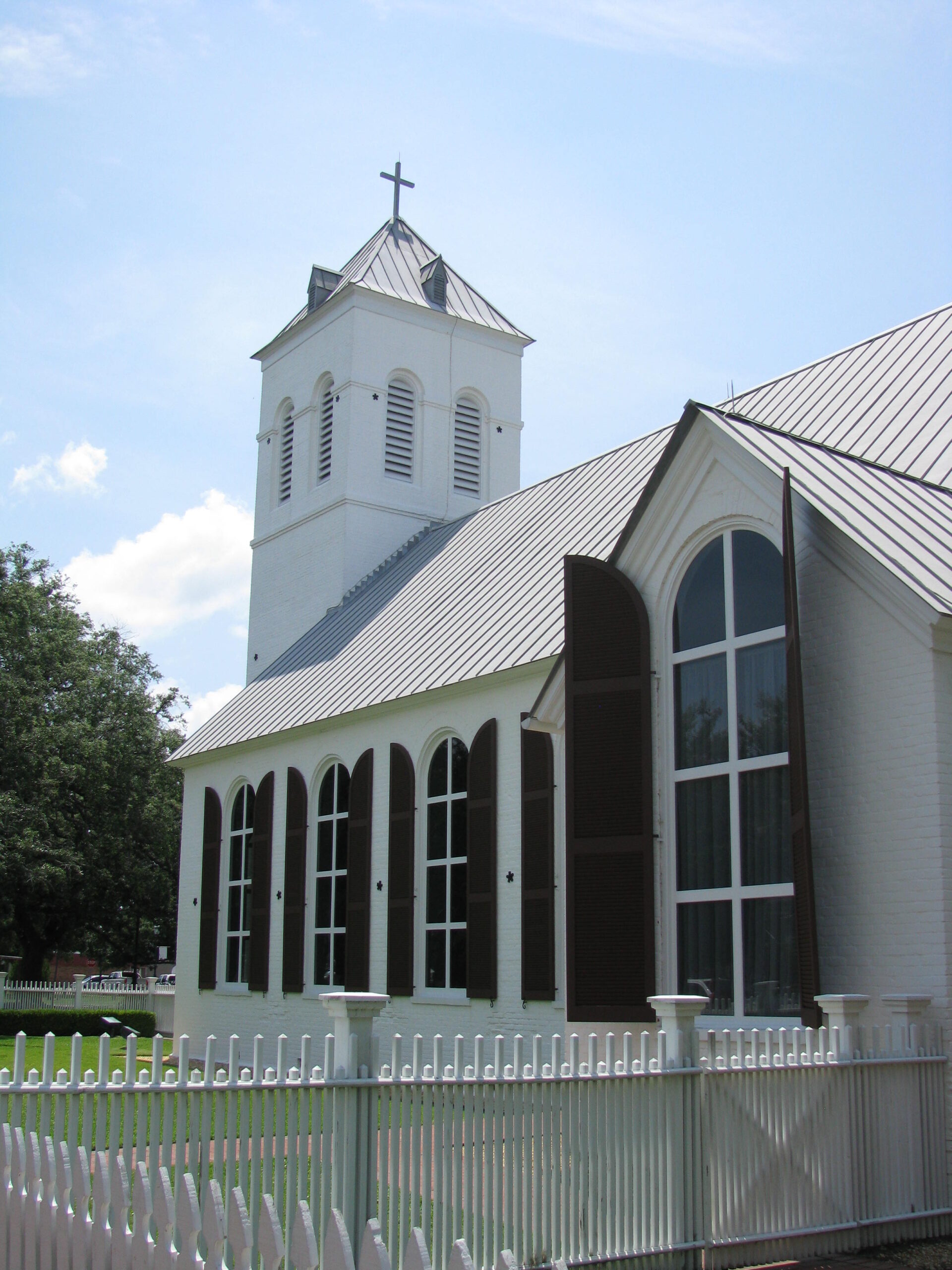
When I was in kindergarten through seventh grade, we lived in Virginia and attended a beautiful, red-brick church with a white steeple. My mom sang in the choir. At the end of every Sunday morning worship service, the choir sang “The Lord Bless You and Keep You” by Peter C. Lutkin—a beautiful musical adaptation of The Priestly Blessing from Numbers 6:24-26. I hope this anthem warms your heart as it does mine.
I hadn’t thought about that anthem in years, but it was still a part of me. As a child, I didn’t appreciate what the words were communicating. I didn’t know they were from the Bible. But I did know that this piece of music was beautiful and I really liked hearing it—and not only because church was over and it was time for lunch. The music was special. Very, very special.
And then we moved from Virginia to Texas. We moved to the dark house. (See part 1 and part 2 of Before and After.)
Reflecting

Different children love different things. Some love sports. Some love animals or other creatures. Some love games. Some love drawing or art. Some love dancing. Some love building or making things. Some love nature. Some love books or writing. Some love running, jumping or climbing. Some love sitting quietly and thinking. Some love riding things—bikes, skateboards, etc. And some, like me, loved music—at home, at church and at school.
What did you love as a child? What wholesome enjoyment brings you joy today?
Do you need help in the Wholesome Enjoyment Department? If so, think about this issue in the days ahead and ask God to help you find and appreciate wholesome enjoyment in your life—whether it’s something you hear, see, taste, touch or do. Music, art, food, petting a dog or cat, walking—or something else that’s healthy and pleasing to the Lord.

My faith journey
Since I was saved when I was 33, some people would say my faith journey began when I was in my 30s. Actually, my faith journey began when I was a young child.
I started singing in children’s choir at church when I was five, and learned how to read music there. I absolutely loved it. I sang in choir at church through high school, and some as an adult. Singing about and to God felt really good. It felt right. I knew the Bible was true. I knew what we were singing was true and good.
While I was growing up—attending church three times a week—I learned The Lord’s Prayer and Bible verses that spoke deeply to my heart as the time approached for me to answer the Lord’s call. (For more, see part 1 and part 2 of my salvation story.)
Church blessings and church hurt
Being raised in church was wonderful for me. It changed my life—at the time and years afterwards. Thousands of beautiful little seeds were planted. People’s kindness. The worship services. The Bible. Sunday school. Friendships. Wednesday night suppers. Vacation Bible School. Church camp. Mission trips. Choir—and more. I still remember making a Christmas ornament one evening at church as a child. The ornament hung on our Christmas tree for years. It meant something—something special. It really did.
Sadly, some people—like my Brandon—had some really bad experiences at church. The important thing to remember is this: “If people hurt you at church, Jesus didn’t.” People will disappoint you at times. Some will abuse you, if given the chance. Beware the wolves. Jesus doesn’t cause or condone people’s hurtful behavior. Reflect on Matthew 11:28-30 and consider reading Gentle and Lowly by Dane Ortlund—an excellent book about the heart of Christ.
Jesus Christ is the same yesterday, today, and forever.
Hebrews 13:8, New Heart English Bible
Finding a good church
Seeking and finding the right church is a big deal and is well worth the effort. Be discerning, ask the right questions, and focus on Jesus. To learn about finding a good church, start reading this post at the Psalm 119 section through The One We Chose.
A healthy, Bible-believing church devoted to Jesus
can bless you and your family in profound ways.
What faith isn’t
Before we dive into The Hall of Faith, we need to review what Christian faith is not. It’s not wishful thinking. It’s not self-actualization—which focuses on me, myself and I instead of focusing on our triune God. It’s not conjuring up what we want. (That’s satanic.) The “name it and claim it” heresy of the prosperity gospel defies God and his word. See this article: “Can we speak things into existence?”
Next, we need to examine the difference between believing and receiving. It’s a heart thing. Why is this important? Because some people who claim to be Christians aren’t. It would behoove us—I mean enlighten us—to know how to identify such imposters because some of them are, unfortunately, dangerous.
From part 7 of The Mirror:
Knowledge vs. knowing
In [the important passage about faith and works], the word “faith” can be a synonym for biblical knowledge. Many people know what the Bible says. Satan certainly knows what the Bible says and can frequently be found quoting and misquoting it for his own malicious, violent agenda. (My evil mother-in-law is also a fan of misquoting the Bible.)
Many people know what the Bible says and claim to be Christians, but they don’t love and treasure Jesus. Indeed, they’ve never met him. To use some old-fashioned vernacular: “Knowledge about someone does not a relationship make….” Jesus spoke to this issue.
Receiving vs. rejecting
The Christian faith requires a relationship with Jesus—believing plus the essential receiving. The demons believe and do not receive. They believe who Jesus is and simultaneously reject him. A number of biblical scholars—and dangerous people with certain personality disorders—do the same.
I’m reminded of the article “Honoring Your Father When He’s Evil” featured in this post’s eye-opening addendum about evil. The author’s father had a PhD, taught adults in Sunday school, and read works by theologian Louis Berkhof. He was also a violent man who terrorized his family—threatening multiple times to shoot and kill them if they ever tried to leave him. Let’s call him Axelrod, or Rod for short. Rod believed who Jesus was but didn’t receive him—didn’t know him. This evil father knew what the Bible said, but he didn’t live it. Rod was a hearer of the word, but not a doer of the word. His “faith” or biblical knowledge didn’t change him. Instead of living the word of God, Rod twisted words like “forgive” and “honor” to control his victims. He would tell you all day long that he had faith. But Rod was the poster child for this truth: “Faith without works is dead.” In this context, “faith” means believing that Jesus is who he says he is. And that, my friends, is not enough. It is not saving faith. Knowing that Jesus spoke the truth about his identity is not transforming faith. It is not the true faith that makes us the children of God. Why is that? Because it leaves Jesus out. At a heart level, it rejects Jesus, just like the demons do.
Have you ever met anyone like Rod? Someone who knows about Jesus, does the Sunday morning show, but has never met Jesus? I sure have. They can be exceedingly dangerous, like my in-laws and Pam, The Almighty. They can also be on TV, preaching to millions. They can be best-selling “Christian” authors or singers. Beware. (Remember to check this NAR list.)
Explore much more in the post quoted above, and scroll to Evil in the index to learn about Evil in the Church.
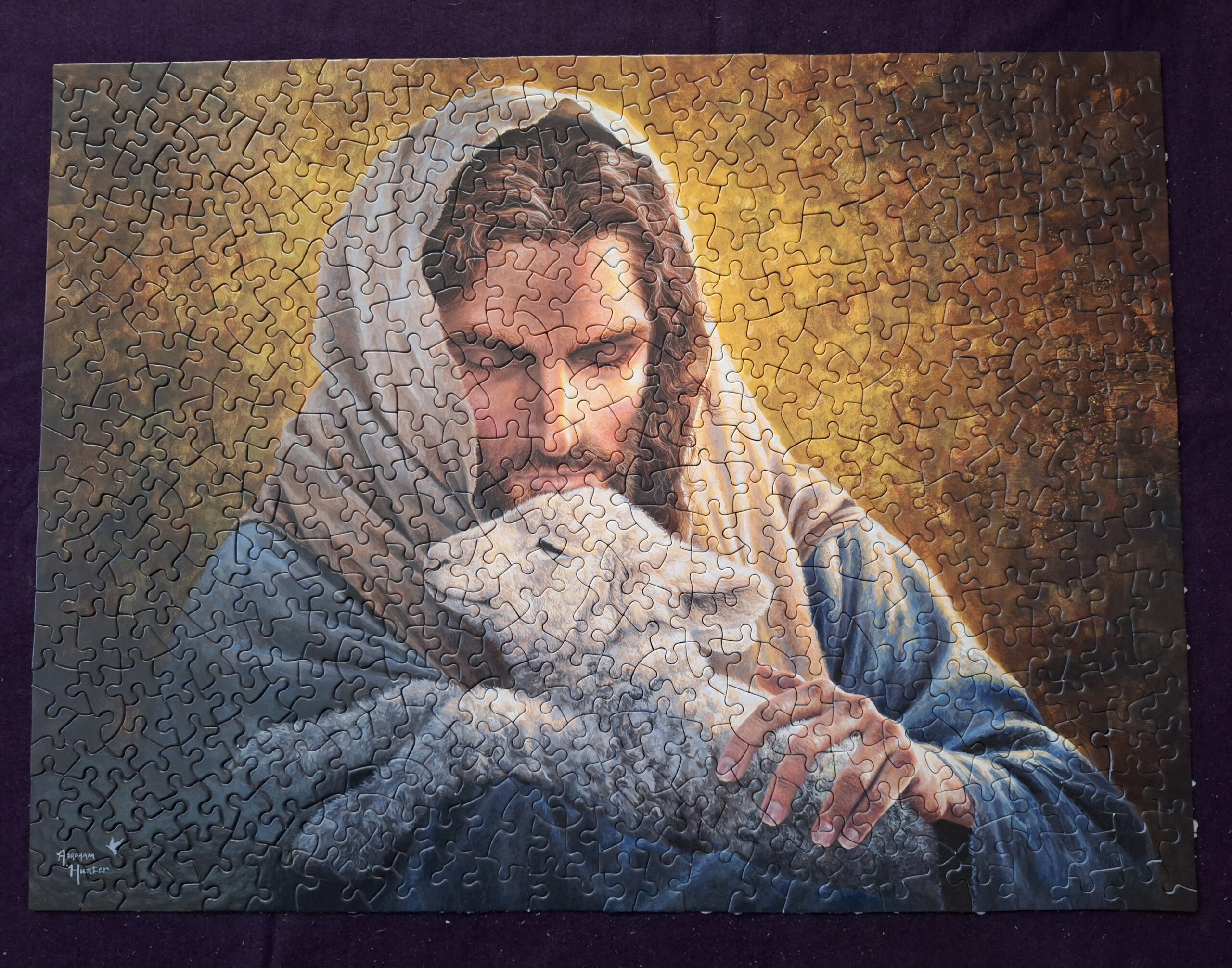
Wolves and sheep
When I was talking to a friend of mine from church last month, I mentioned that wolves hang out with sheep. I said there will always be wolves in sheep’s clothing at church for obvious reasons. She’d never thought about that. Peaceful Readers, we must keep our brains, eyes and ears in the Fully On position—completely awake and aware—when we’re at church. Throughout time—wolves hang out near sheep. What did Jesus have to say about this?
“Beware of false prophets, who come to you in sheep’s clothing, but inwardly are ravening wolves. By their fruits you will know them. Do you gather grapes from thorns, or figs from thistles? Even so, every good tree produces good fruit; but the corrupt tree produces evil fruit. A good tree cannot produce evil fruit, neither can a corrupt tree produce good fruit. Every tree that does not grow good fruit is cut down, and thrown into the fire. Therefore, by their fruits you will know them.
Not everyone who says to me, ‘Lord, Lord,’ will enter into the kingdom of heaven; but he who does the will of my Father who is in heaven. Many will tell me in that day, ‘Lord, Lord, did not we prophesy in your name, in your name cast out demons, and in your name do many mighty works?’ And then I will tell them, ‘I never knew you. Depart from me, you who practice lawlessness.’”
Matthew 7:15-23, New Heart English Bible
Chaos, confusion and destruction come from
the evil one and his followers—the wolves.
Not all unbelievers are dangerous wolves, but some are.
The dream, the déjà vu and the film
Explore this post to learn about a dream I had about wolves—and what it meant, plus the déjà vu I had as a little girl about the red-brick church in Virginia with the white steeple.
Also, watch Jesus, The Soul Shepherd—a wonderful 30-minute film demonstrating important symbolism in the Bible—wolves and sheep, the Shepherd of our souls, food and water, the sheep pen, the gate, a lost sheep, and goats vs. sheep. This important film is listed first on my Documentaries page. I paused while writing this paragraph to watch it again. Jesus, The Soul Shepherd is beautiful and meaningful every time. I hope you’ll watch it and share it.
Wanting more
From part 11 of Before and After:
If you don’t know Jesus yet, read the Exploring Christianity section in part 10 and find an Alpha class near you. Ask big questions. Seek big answers.
Jesus—grace and truth
 Our Lord and Savior, Jesus, stands in stark contrast to the devil and his peeps.
And the Word became flesh and lived among us, and we saw his glory, such glory as of the one and only of the Father, full of grace and truth…. For the Law was given through Moses, grace and truth came through Jesus Christ.
John 1:14 and 17, New Heart English Bible
Followers of Jesus demonstrate the Fruit of the Spirit: “love, joy, peace, patience, kindness, goodness, faithfulness, gentleness, and self-control” (Galatians 5:22b-23a, NHEB). We’re known by our fruit. We aren’t perfect, by any stretch of the imagination; but our “good fruit” increases over time, if we’re cooperating with God. The virtues of life grow in us as we’re sanctified by the Holy Spirit. (See Virtues in the index.)
The hall of faith
Now faith is being confident of what we hope for, convinced about things we do not see. For by this, the people of old were [commended].
Hebrews 11:1-2, New Heart English Bible
Before starting The Hall of Faith list, the writer of Hebrews gives us another important example of faith.
By faith we understand that the universe has been [created] by the word of God, so that what is seen has not been made out of things which are visible.
Hebrews 11:3, World English Bible
God spoke the universe into existence. He didn’t assemble it with individual, pre-existing pieces. Faith allows us to receive this vital truth.

Let’s start exploring The Hall of Faith honorees. I picture The Hall of Faith like a beautiful, ornate hall with statues or paintings lining the walls, with memorabilia or descriptions in front of each one—like a beautiful, timeless, holy museum.
1. Abel—the worshiper
Cain and Abel were the first two sons of Adam and Eve. The brothers each brought a different sacrifice to God. Abel’s sacrifice was accepted; Cain’s wasn’t. Out of jealousy, Cain killed his brother Abel.
By faith, Abel offered to God a better sacrifice than Cain, through which he was attested as righteous, God testifying with respect to his gifts; and though he died he still speaks through it.
Hebrews 11:4, New Heart English Bible
How does Abel still speak through his offering to God? Abel approached God in faith; Cain didn’t. Abel approached God in righteousness; Cain didn’t. Abel approached God in humility; Cain didn’t.
Abel worshiped God in spirit and truth—with his heart.
Read this excellent article from Got Questions: “Why did God accept Abel’s offering but reject Cain’s offering?” It explains the heart issues involved and includes revealing Bible passages about Cain and Abel.
2. Enoch—friend of God
By faith, [Enoch] was taken away, so that he would not see death, “and he was not found, because God took him away.” For before he was taken he was attested as having pleased God. Now without faith it is impossible to be well pleasing to him, for he who comes to God must believe that he exists, and that he is a rewarder of those who seek him.
Hebrews 11:5-6, New Heart English Bible
The Bible tells us the story of Enoch in Genesis 5:21-24. One phrase is repeated twice in those four short verses: “Enoch walked with God” (Genesis 5:22 and 24, WEB). It may seem odd that someone who only got four verses is included in The Hall of Faith. But when we slow down, we find that Enoch, the father of Methuselah, lived 365 years—and he walked with God his whole life. He didn’t waiver. He didn’t chase other gods or new fads. He didn’t idolize his wife, children, grandchildren, great-grandchildren, etc. Enoch stayed faithful. And he stayed close to God.
Enoch was a faithful friend of God.
The two
Only two people in the Bible were taken from the earth by God and didn’t experience death—Enoch and the prophet Elijah. That’s a very short list. When we get to heaven, I think we should get in the line to hear about Enoch’s life. The fact that he was selected for The Hall of Faith is a huge deal. I, for one, would love to hear his Top 50 Stories. I know they’ll be fascinating.
Faith fact
Included in the testimony about Enoch in The Hall of Faith, we find important truths about God. A person can’t please God without believing (1) “that he exists,” and (2) “that he is a rewarder of those who seek him” (v. 6). In other words, we must believe not only that God exists, but that he is good. God sees and knows us personally, desires to be found and known by us, and rewards us for seeking him, in untold ways. Our triune God includes God, the Father; Jesus Christ, the Son—our Savior and Redeemer; and the Holy Spirit.
3. Noah—the obedient
Let’s begin with Noah’s commendation in The Hall of Faith.
By faith Noah, being warned about things not yet seen, moved with godly fear, prepared a ship for the saving of his house, through which he condemned the world and became heir of the righteousness which is according to faith.
Hebrews 11:7, World English Bible
The phrase “through which he condemned the world” can be a little confusing. More info on that later.
The account of Noah’s life begins at the end of Genesis 5 and continues through chapter 9.
What God saw
And God saw that the wickedness of humankind was great on the earth, and that every inclination of the thoughts of his heart was only evil continually. And God was sorry that he had made humankind on the earth, and he was grieved in his heart. God said, “I will destroy humankind whom I have created from the face of the earth; humankind, along with animals, crawling creatures, and flying creatures of the sky; for I am sorry that I have made them.”
Genesis 6:5-7, New Heart English Bible
The Lord God “saw… the wickedness of humankind” and “was grieved in his heart.” His decision to destroy mankind was not made lightly, flippantly or in some kind of tantrum, as we can be prone to, at times. He saw the pervasive, dark reality of human depravity—and the time had come for action.
God saw how bad things were—and he also saw one bright light.
But Noah found favor in the sight of God….
Noah was a righteous man,
blameless among the people of his time.
Noah walked with God.
Genesis 6:8, 9b, New Heart English Bible
Like Enoch, commended above, “Noah walked with God” (v. 9b). What a beautiful testimony about Noah’s heart and his long life devoted to God. (Noah’s three sons were born after Noah was 500 years old. Earlier in chapter 6, God declared a future age cap of 120 years.)
Noah’s instructions and obedience
The next section includes God’s instructions for the building of what we call Noah’s ark. It’s fascinating.
First, a short explanation. I usually quote from the New Heart English Bible because it’s an excellent translation in the public domain (not copyrighted). In the passage below, I greatly appreciate the conversion of the biblical measuring unit—called cubits—to the United States measuring units of feet and inches, so we can grasp the enormity of Noah’s assignment with a modicum—I mean a smidge—of clarity.
And God said to Noah, “The end of all flesh has come before me, for the earth is filled with violence through them…. Make a box-shaped vessel of gopher wood. You are to make rooms in the vessel, and cover it inside and outside with pitch. And this is how you are to make it. The length of the vessel is to be five hundred seventeen feet, its breadth eighty-six feet, and its height fifty-two feet. And you are to make a roof in the vessel, and you are to finish it twenty-one inches above. And you are to set the door of the vessel in its side. You are to make it with lower, second, and third levels.
And as for me, look, I am bringing a flood of waters on the earth, to destroy all flesh having the breath of life from under the sky. Everything that is on the earth will die. But I will establish my covenant with you. You are to come into the vessel, you, your sons, your wife, and your sons’ wives with you. Of every living thing of all flesh, you are to bring two of every sort into the vessel, to keep them alive with you. They shall be male and female…. [Two] of every sort shall come to you, to keep them alive. And as for you, take for yourself all the kinds of food that are eaten, and gather it to yourself; and it will be food for you, and for them.”
Thus Noah did. According to all that God commanded him, so he did.
Genesis 6:13a-b, 14-19, 20d-22, New Heart English Bible (paragraph breaks added)
Ark summary: 517 feet long, 86 feet wide and 52 feet tall, with three stories/decks inside, divided into many rooms, plus a roof and door.
To say that Noah was entrusted with a massive job would be a gross understatement. The Lord strengthened him spiritually, mentally, emotionally and physically to successfully accomplish what was asked of him. We can also be sure that Noah’s three sons helped him.
Provided

God provided the concept, design and specifications for the ark, the raw materials required for the job, and the food. He also brought the animals to the ark. “Two of every sort [of animal, bird and creature] shall come to you” (v. 20d, NHEB). We can be assured that God brought the finest examples of each and every creature, and that many baby birds, animals and reptiles were born during their journey. In chapter 7, we learn that God shut the massive door, which had to accommodate elephants and giraffes.
Noah and his sons provided the labor—including chopping down an immense number of trees; cutting the trees into the required lumber, etc.; building the ark; making and applying the pitch to seal the ark inside and out (see this article); and gathering and storing all the food.
Noah’s sons were born after he was 500 years old. The ark was completed when Noah was 600 years old.
The flood
Here are some key verses about the flood—after Noah’s family and the animals went inside the ark. I greatly appreciate the details.
In the six hundredth year of Noah’s life, in the second month, on the seventeenth day of the month, on the same day all the fountains of the great deep were burst open, and the floodgates of the sky were opened. The rain was on the earth forty days and forty nights….
And the waters rose very high on the earth. And all the high mountains that were under the whole sky were covered. The waters rose and covered the highest mountains to a depth of more than twenty-six feet…. Every living thing was destroyed that was on the surface of the ground, including people, animals, crawling creatures, and flying creatures of the sky. They were destroyed from the earth. Only Noah was left, and those who were with him in the vessel. The waters prevailed on the earth one hundred fifty days.
And in the seventh month, on the seventeenth day of the month, the vessel came to rest on the mountains of Ararat. The waters receded continually to the tenth month. In the tenth month, on the first day of the month, the tops of the mountains became visible.
Genesis 7:11-12, 19-20, 23-24; 8:4-5, New Heart English Bible
The altar
After the waters receded, Noah’s family and all the animals came out of the ark. We see Noah’s reverence and devotion to the Lord. The first thing Noah did was to build an altar and offer sacrifices to God, who was pleased with Noah’s offerings.
The big three—the promise, the blessing and the sign
God promised to never again strike down every living thing.
God blessed Noah and his sons, and said to them, “Be fruitful, and multiply, and fill the earth.”
Genesis 9:1, New Heart English Bible
And God created the rainbow as a sign of his covenant.
Needless to say, the hijacking of the rainbow by the LGBTQ movement to celebrate depravity and sin shows us how Satan spits in God’s face. See Gender in the index, especially this post, which includes LGBTQ resources for healing.
God created the beautiful rainbow
and gave it to us as a gift and a reminder.

Wrap-up and resources
In the heading for Noah, I called him “Noah—the obedient” because he faithfully labored on his enormous, God-given task for perhaps 100 years.
♦ This interesting article explains how Noah’s life heralded an obvious truth to everyone around him: Choose God and live! The article also explains the verse about Noah in The Hall of Faith: “By faith Noah… prepared [the ark…], through which he condemned the world…” (Hebrews 11:7, WEB). I found it very helpful.
♦ Life-sized replica, Ark Encounter, located in Kentucky; highly recommended by a couple in our life group at church
♦ Fox News Clip—“Saturday in America with Kayleigh McEnany” (October 3, 2026)
“Could this be Noah’s Ark? Researchers PROBE massive formation in Turkey”
♦ Another article: “Who was Noah in the Bible?”
Your turn
Did one of today’s honorees stand out to you? Abel—the worshiper? Enoch—friend of God? Noah—the obedient?
Abel worshiped God in spirit and truth.
Enoch and Noah walked with God.
Ask the Lord what he wants you to see or remember about one of these three honorees. Do you know someone who’d be blessed by today’s post?
Closing blessings
Let’s close with The Priestly Blessing, which speaks the truth from God’s word into our home every day.

‘The LORD bless you, and keep you.
The LORD make his face to shine on you, and be gracious to you.
The LORD lift up his face toward you, and give you peace.’
Numbers 6:24-26, New Heart English Bible
For eight years when I was growing up, I heard Mom and the choir sing this blessing every Sunday. As an adult, I was privileged to sing this glorious version by John Rutter.
Today’s closing song below is “The Doxology.” We sang it every Sunday in the red-brick church with the white steeple. I love it. I hope it blesses you richly today.
Coming next
We’ll learn about Abraham and his wife Sarah—the next honorees in The Hall of Faith.
Thanks for reading and for Choosing Peace.
Closing word and song
[The] righteous will live by faith.
Habakkuk 2:4b, New Heart English Bible
“The Doxology” by Anthem Lights, featuring Selah
Newsletter
To stay current on recent posts, sign up for my monthly newsletter.