Abraham and Sarah—people, place and purposes
One of the beautiful things The Hall of Faith demonstrates for us is God’s focus on our hearts. In these revealing commemorations, each person’s finest hour, steady devotion or life’s work of faith is highlighted. It doesn’t say, “Well, let’s not forget so-and-so’s colossal screw-up. But we’ll honor him or her anyway.” No way. Honor is given. These people are treated the way we’d want to be treated. (We’ll unpack this issue some more when we cover Rahab.)
If you love and treasure Jesus, remember these important truths:
As far as the east is from the west, so far has he removed our transgressions from us.
Psalm 103:12, New Heart English Bible
“[For] I will forgive their iniquity, and their sins I will remember no more.”
Jeremiah 31:34d, New Heart English Bible
Seek and find
What if you’re not a Christian? From part 11 of Before and After:
If you don’t know Jesus yet, read the Exploring Christianity section in part 10 and find an Alpha class near you. Ask big questions. Seek big answers.
If this section applies to you, I pray that you’ll receive this urgent plea:
We are therefore ambassadors on behalf of Christ, as though God were making his appeal through us. We implore you on behalf of Christ, be reconciled to God.
2 Corinthians 5:20, New Heart English Bible (emphasis added)
Explore God, Jesus and The Holy Spirit in the index.


Intro
In this third and final post about Abraham and Sarah, I hope you enjoy the wedding photos from two weddings we attended years ago. In part 2, we explored Abraham and Sarah’s important honor as the only married couple commended by name* in The Hall of Faith.
*While writing today’s post, I realized that there’s another married couple in The Hall of Faith whose names aren’t included. We’ll cover them later. I corrected parts 2 and 3, and I apologize for the error.
Last time, in part 3, we spent time exploring Abraham and Sarah’s hard times caused by sin—lies and polygamy. People of faith sin, and suffer the consequences. Don’t we know it!
It’s important to end our coverage of this special couple
with a solid emphasis on their faith and their impact on the world.
First—an epilogue about the key people and their descendants. After that, we’ll explore events in a particular place where Abraham and Sarah lived. And last, we’ll consider the takeaways from Abraham and Sarah. What can we learn from them?
It’s time for Abraham and Sarah—People, Place and Purposes. Get ready to read about Abraham’s neighbor, a dream and lemonade.

Epilogue
Sarah
After what I hope was many years of peace, Sarah died in Hebron when she was 127. Abraham was 137 when he lost his dear wife.
Abraham came to mourn for Sarah, and to weep for her.
Genesis 23:2b, New Heart English Bible
Abraham
People don’t usually know or talk about this part of Abraham’s life, but we will not skip it. After Sarah’s death, Abraham took another secondary wife or concubine named Keturah. Together, they had six sons.
And Abraham gave all that he owned to his son Isaac, and to the sons of Abraham’s secondary wives, Abraham gave gifts. He sent them away from Isaac his son, while he was still living….
This was the length of Abraham’s life: one hundred seventy-five years. Abraham breathed his last, and died in a good old age, an old man and satisfied, and was gathered to his people. Isaac and Ishmael, his sons, buried him in the cave of Machpelah…, which is near Mamre…. Abraham was buried there with Sarah, his wife.
Genesis 25:5-6a, 7-9b, 9d, 10b, New Heart English Bible
Abraham’s concubines—Hagar and Keturah—were buried elsewhere. (To dig into the innate problems with polygamy, explore part 3.)
Wisdom and protection
We learned last time that Abraham sent away his concubine Hagar and their son Ishmael when the boy was roughly 16 or 17. Sarah demanded it, and the Lord confirmed that she was right.
What about the six sons of Keturah? Abraham demonstrated great wisdom when he sent them away. Why did he do it? To protect Isaac—his sole heir, as stipulated in the Lord’s covenant. Six against one—Keturah’s sons against Isaac—could be quite dangerous, particularly since substantial wealth was involved—vast gold, silver, livestock, hundreds of servants and much more.
When money and power are involved, the fangs and claws come out.
Abraham protected his son Isaac from a potential uprising. Thanks be to God.
Three distinct families
Abraham clearly understood the hostility between his three families, including his sons’ wives, descendants and servants. Abraham’s three families came from (1) Sarah, the mother of Isaac; (2) Hagar—Sarah’s servant, the mother of Ishmael; and (3) Keturah, the mother of six sons. Abraham’s sons by three different women branched into three distinct, separate groups. Isaac was favored and chosen by God; his brothers weren’t. We can do the math here, Peaceful Readers, can’t we?
Envy. Us vs. Them. Hatred.
Why is envy so dangerous? From this post:
Envy is a dangerous, violent, insidious thief.
I can’t overstate the danger presented by the sin of envy. It isn’t simply wanting what someone else has. It’s wanting that person not to have it. Envy can act as the fuel behind a wide range of evil thoughts and actions—including murder or being obsessed with ruining someone’s life. (That reminds me of my deceased sibling, Pam, The Almighty.)
For where envying and strife is, there is confusion and every evil work.
James 3:16, King James Bible
Isaac
When Abraham and Sarah’s son Isaac was 40, he married Rebekah. They had twin sons—Jacob and Esau.
Isaac’s descendants
From Isaac’s twin sons, God chose Jacob, not Esau. (Details in this post.) Jacob’s 12 sons became the 12 tribes of Israel. For that dramatic tale, see The Gift of the Bible here on Choosing Peace. It is epic.
Jacob’s favorite son, Joseph—Abraham’s great-grandson—was sold by his 10 older brothers to Ishmaelite slave traders, who took him to Egypt. (Ishmaelites were the descendants of Ishmael.) Track with me here; this is important. Descendants of Ishmael enslaved a descendant of Isaac—Ishmael’s half-brother and sworn enemy.
Joseph was in the third generation descended from Abraham through his son Isaac.
♦ Generation 1 = Abraham to Isaac
♦ Generation 2 = Isaac to Jacob
♦ Generation 3 = Jacob to Joseph
♦ Generation 4 and beyond = slaves in Egypt
Slavery and rescue
The Lord told Abraham in a dream about the enslavement of his descendants for 400 years in a foreign land. And that land was Egypt. To read about pieces of the Israelites’ journey after the Lord rescued them from slavery, read these Before and After posts:
♦ Part 9 ~ Manna from Heaven
♦ Part 10 ~ Water from the Rock
♦ Part 11 ~ War with the Amalekites
God displayed his power and protection of his people in these fantastic events.
Your turn
Were you ever a slave to something or someone? I’m talking figuratively. Were you in bondage to a particular sin or addiction? Were you misled by wrong philosophies or ways of thinking? Were you stuck in a destructive relationship? Were you targeted by dangerous people—relatives, perhaps? I can certainly understand many of these kinds of scenarios.
Explore the index page. Does something jump out at you?
If so, follow where the Lord leads….

For freedom Christ has set us free;
stand fast therefore, and do not
submit again to a yoke of slavery.
Galatians 5:1, Revised Standard Version*
*Revised Standard Version of the Bible, copyright © 1946, 1952, and 1971 the Division of Christian Education of the National Council of the Churches of Christ in the United States of America. Used by permission. All rights reserved.
Ishmael
Let’s explore Ishmael and his descendants. Ishmael was Abraham’s first-born son through Hagar, Sarah’s servant.
What happened after Hagar and her teenager were sent away?
God was with the boy, and he grew. He lived in the wilderness, and as he grew up, he became an archer. He lived in the wilderness of Paran. His mother got a wife for him out of the land of Egypt.
Genesis 21:20-21, World English Bible
When was Ishmael mentioned again? When he and Isaac buried their father, Abraham, who lived to the ripe old age of 175. Ishmael was born when Abraham was 86, and Isaac was born when Abraham was 100; so Ishmael was 89 and Isaac was 75 when their father died.
Obviously, Isaac and his half-brother Ishmael knew where each other lived, generally-speaking. And they each had servants who could do any necessary searching. Otherwise, Ishmael wouldn’t have been present for Abraham’s burial.
We don’t know how much contact Isaac and Ishmael had in those intervening years. I suspect it was very little, if any. The Bible tells us there was hostility between Ishmael’s descendants and Isaac’s descendants. Translation: Violence.
The Arab nations and Islam
Ishmael had 12 sons, who became the Arab nations, including Mohammed—founder of the Islamic religion practiced by Muslims. This important article, mentioned in part 3, describes the Jews and Arabs as “mortal enemies” since Bible times, and explains how the Quran makes Hagar the heroine—with Ishmael elevated and called “the child of promise” instead of Isaac. Satan flips the truth upside-down, doesn’t he?
This remarkable passage in Galatians describes the vast chasm between the children of the slave woman—Hagar, and the children of the free woman—Sarah, and how Ishmael and his descendants persecuted the children of God then and through the ages.
Egyptians
Ishmael’s mother, Hagar, was Egyptian. She got an Egyptian wife for Ishmael. The Egyptians didn’t worship the one true God. This fascinating article explains the relationship between the pantheon of Egyptian gods and the ten plagues of Egypt. It is mind-blowing. Highly recommended.
Ishmaelite conspiracies
Consider what we learn about Ishmael’s descendants from Psalm 83.
God, do not keep silent.
Do not keep silent, and do not be still, God.
For, look, your enemies are stirred up.
Those who hate you have lifted up their heads.
They conspire with cunning against your people.
They plot against your cherished ones.
“Come,” they say, “and let’s destroy them as a nation,
that the name of Israel may be remembered no more.”
For they have conspired together with one mind.
They form an alliance against you.
The tents of Edom and the Ishmaelites;
Moab, and the Hagrites;
Gebal, Ammon, and Amalek;
Philistia with the inhabitants of Tyre;
Assyria also is joined with them.
They have helped the descendants of Lot.
Psalm 83:1-8, New Heart English Bible (emphasis added)
Many nations—including the Ishmaelites—“conspired together” against the Israelites and against God.
Origins
Do you see the origins of all the strife between Christians and Muslims (and Jews and Muslims)? It started with Sarah’s idea—when she chose fear over faith. “God must be busy. Maybe he forgot about us. Abraham, please make a baby with my slave.” And Abraham made Sarah’s very bad idea a reality when he failed to say no. See part 3 for details.
From one family to the Savior
What did God do with Sarah and Abraham’s decision based on fear instead of faith? He worked it all for good. Some people would say: “He took their lemons and made lemonade.” Or, “He took their mess and made a message.” Speaking of a message, check out this visual message about the grace of prayer during this beautiful backyard wedding.
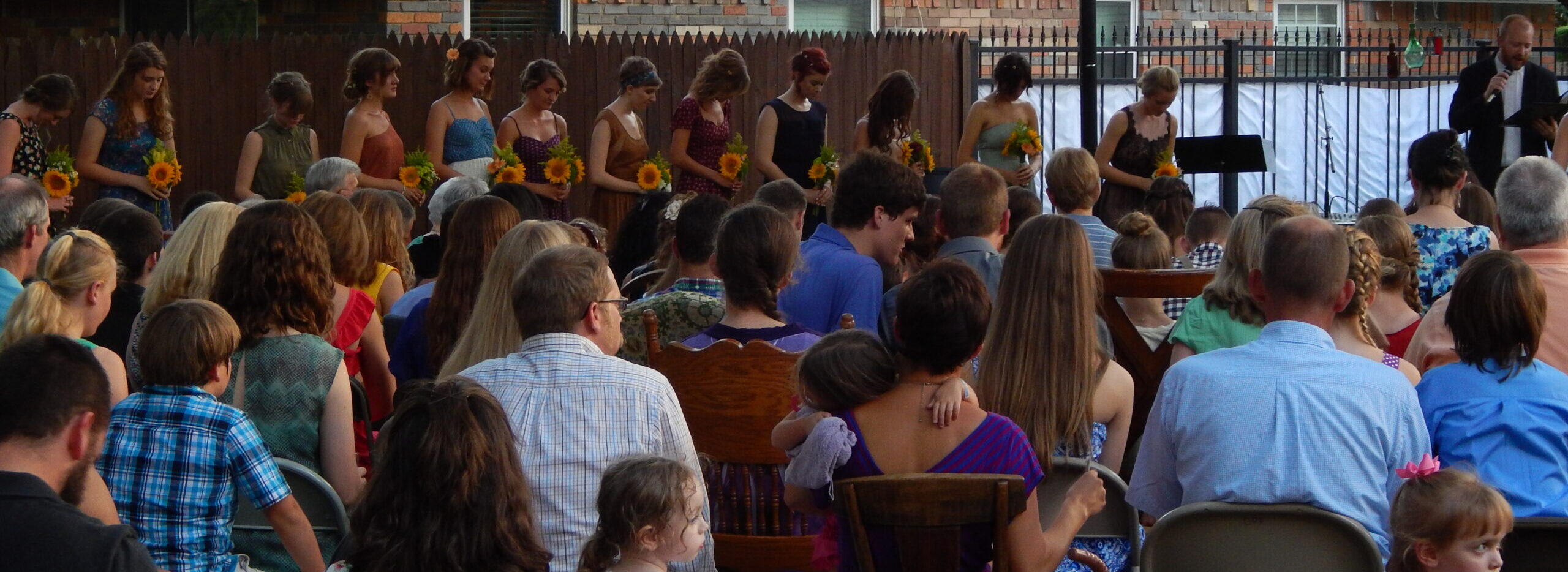
The twists and turns of this family’s story brought Abraham’s grandson Jacob and all of his descendants to Egypt (including Joseph, who arrived first). After the 12 tribes of Israel spent 400-plus years in slavery, the Lord Almighty rescued them. The Exodus. The Ten Commandments. Epic miracles, signs and wonders. And so much more—all the way through the birth, life, death and resurrection of Jesus Christ, our Savior and Lord!
The genealogy of Jesus begins with Abraham—the man of faith.
A record of the genealogy of Jesus Christ, the son of David, the son of Abraham.
Abraham was the father of Isaac, and Isaac the father of Jacob, and Jacob the father of Judah and his brothers….
Matthew 1:1-2, New Heart English Bible

We’ve looked at the people—the key players in the story of Abraham and Sarah. Now it’s time to explore a key place where Abraham and Sarah lived.
[Abraham] moved his tent, and came and lived by the oaks of Mamre,
which are in Hebron, and built an altar there to God.
Genesis 13:18, New Heart English Bible
After Abraham gave his nephew Lot first pick of where to settle, Abraham and Sarah moved near the oaks of Mamre. It turns out, from the first Bible passage below, that Mamre was one of Abraham’s neighbors. Later in Genesis, Mamre is mentioned as the name of a village or town. Perhaps it was named after Abraham’s neighbor.
Military might
We read about the oaks of Mamre again in chapter 14. A large battle of four kings against five kings took place in the Valley of Siddim. (Abraham was called Abram at this time.)
One who had escaped came and told Abram, the Hebrew. Now he lived by the oaks of Mamre, the Amorite, brother of Eshcol, and brother of Aner; and these were allies of Abram. When Abram heard that his relative was taken captive, he mobilized his trained men, born in his house, three hundred and eighteen, and pursued as far as Dan. He divided his forces against them at night, he and his servants, and attacked them, and pursued them to Hobah, which is north of Damascus. He brought back all the possessions, and also brought back his relative, Lot, and his possessions, as well as the women and the other people.
Genesis 14:13-16, New Heart English Bible
Abraham had allies among his neighbors, the Amorites. From part 2:
Abraham possessed his own trained military forces and was also a military leader! The Lord trusted Abraham with many things and many people. He was an excellent leader.
Meeting with two kings
Abraham knew the neighboring kings and met with them—including one particular king who was also a priest of the one true God. Can you believe that? Someone was a king and a priest? Shocking.
Melchizedek
The king of Sodom went out to meet [Abram], after his return from the defeat of Kedorlaomer and the kings who were with him…. Melchizedek king of Salem brought out bread and wine; now he was priest of God Most High.
He blessed him, and said, “Blessed be Abram by God Most High, Maker of heaven and earth: and blessed be God Most High, who has delivered your enemies into your hand.” And [Abram] gave him a tenth of everything.
Genesis 14:17a-b, 18-20, New Heart English Bible

We learn more about Melchizedek—priest and king—in Hebrews:
For this Melchizedek, king of Salem, priest of God Most High, …met Abraham returning from the slaughter of the kings and blessed him, to whom also Abraham divided “a tenth part of everything” (being first, by [his name’s translation], king of righteousness, and then also king of Salem, which is king of peace…).
Now consider how great this man was, to whom even Abraham, the patriarch, gave a tenth out of the most valuable plunder.
Hebrews 7:1-2, 4, New Heart English Bible
The prophesy
King of Righteousness and King of Peace. Who does that sound like? Note David’s prophesy, written about Jesus:
The LORD has sworn, and will not change his mind: “You are a priest forever in the order of Melchizedek.”
Psalm 110:4, New Heart English Bible
The relevance
Hebrews 7, which unpacks the correlation between Melchizedek and Jesus, ends with seven lovely, important verses.
Jesus lives forever—praying to God for us.
Hebrews 7:25b, NHEB paraphrase
For more, see this article: “What is the Melchizedek priesthood?”
King of Sodom
After Melchizedek blessed Abraham, the king of Sodom spoke.
The general location of Sodom is mentioned in Genesis 10. The character of the city of Sodom is made clear in Genesis 13, verse 13: “Now the people of Sodom were evil, sinning greatly against God” (NHEB).
Now the king of Sodom said to Abram, “Give me the people, and take the possessions for yourself.” But Abram said to the king of Sodom, “I take an oath to God Most High, Maker of heaven and earth, that I will not take a thread nor a sandal strap nor anything that is yours, lest you should say, ‘I have made Abram rich.’ I will accept nothing from you except that which the young men have eaten, and the portion of the men who went with me: Aner, Eshcol, and Mamre. Let them take their portion.”
Genesis 14:21-24, New Heart English Bible
Abraham’s character
What do we learn, Peaceful Readers, from this little exchange?
First, Abraham wasn’t afraid to say no to a king. That’s noteworthy, to say the least. Second, Abraham anticipated that the king of Sodom would lie—taking credit for something that wasn’t true. Third, Abraham made his devotion to God Almighty abundantly clear: “I take an oath to God Most High, Maker of heaven and earth…” (v. 22b). Fourth, he cared about his allies receiving their appropriate share. He treated his people and allies well.
Did Abraham know the depths of the violent depravity going on in Sodom? Had he heard about that? It was horrifically bad.
Abraham’s discernment
Abraham met with two kings: Melchizedek and the king of Sodom. Abraham received a blessing from Melchizedek and gave him a tenth of the spoils. On the flip side, Abraham refused the profuse riches offered by the king of Sodom.
Abraham met with a godly man and an evil man, and he was quite clear about who was who. Abraham valued God above wealth. He would not forsake the Lord to partner with evil. Abraham took an oath to God that he wouldn’t accept “a thread nor a sandal strap” (v. 23a) from the king of Sodom. Abraham spoke directly and unapologetically. “I will not play—I mean deal—with you. At all.”
The meeting with the two kings
revealed Abraham’s honor—powerfully.

We read about Abraham and Sarah living near the oaks of Mamre again in chapter 18, when the Lord and three angels (who appeared like men) came to visit them. See the Angelic Encounter section in part 2. What a remarkable day.
Nearby—Sodom and Gomorrah
After the angels took their leave and headed toward Sodom, the Lord and Abraham had an interesting conversation.
Abraham’s pleading for the righteous
From this post:
People who suffered from the evil of Sodom and Gomorrah cried out to God for justice. Their cries were heard and God planned to destroy the evil cities. When I say evil, it’s beyond our comprehension. Truly. Abraham pleaded and asked God not to destroy Sodom—where his nephew Lot lived—if 10 or more righteous people were found there. Sadly, there weren’t 10 or more godly people in the whole city.
God’s righteous justice
The time had come for God’s righteous justice. (For details about the city’s evil, see the section titled A Time for Justice in this post.)
Then God rained on Sodom and on Gomorrah sulfur and fire from the sky. He overthrew those cities, and all the plain, and all the inhabitants of the cities, and that which grew on the ground. But [Lot’s] wife looked back from behind him, and she became a pillar of salt.
Abraham got up early in the morning to the place where he had stood before God. He looked toward Sodom and Gomorrah, and toward all the land of the plain, and he saw; and look, the smoke was rising from the land like smoke from a furnace.
It happened, when God destroyed the cities of the plain, that God remembered Abraham, and sent Lot out of the middle of the overthrow, when he overthrew the cities in which Lot lived.
Genesis 19:24-29, New Heart English Bible
Can you imagine what Abraham saw as he looked toward the incinerated cities? I can’t begin to imagine the sight, the smell, the experience…. (To understand Lot’s wife, read the Wrong Focus section in this post.)
Biblical archaeology
Places matter. And they can contain fascinating, revealing clues.
Enjoy these outstanding archaeological findings, brought to us by Expedition Bible:
♦ “Sulfur Balls of Sodom and Gomorrah”
♦ “MAMRE — Where God Appeared to Abraham!”
The takeaways
Father Abraham and mother Sarah
We’ve discovered many great things about Abraham and Sarah. Consider this beautiful testimony about them.
“Listen to me, you who follow after righteousness, you who seek the LORD: look to the rock you were cut from, and to the hold of the pit you were dug from. Look to Abraham your father, and to Sarah who bore you; for when he was but one I called him, and I blessed him, and made him many.”
Isaiah 51:1-2, New Heart English Bible
Here’s my Top 10 list for Abraham, the man of faith.
Abraham—virtues and strengths
1. Reverent worshiper who built altars
2. Excellent, godly leader
3. Followed God obediently
4. Military skill, strategy, leadership
5. Wisdom, honor and discernment
6. Understood God’s power and eternal truths
7. Care, thoughtfulness, hospitality
8. Walked and talked with God
9. Boldness in the face of evil
10. Deep, devoted faith
Think about that list. Do you need to be more like Abraham in one of these areas? Pray and ask God to grow that particular virtue or quality in you. Seek opportunities to practice your selected virtue or characteristic.
Sarah—the right kind of beauty
We’re told multiple times that Sarah was a remarkable beauty. But her outward appearance wasn’t what made her beautiful. Consider this important passage from the New Testament.
Let your beauty be not just the outward adorning of braiding the hair, and of wearing jewels of gold, or of putting on fine clothing; but in the hidden person of the heart, in the incorruptible adornment of a gentle and quiet spirit, which is in the sight of God very precious. For this is how the holy women before, who hoped in God also adorned themselves, being in subjection to their own husbands: as Sarah obeyed Abraham, calling him lord, whose children you now are, if you do well, and are not put in fear by any terror.
1 Peter 3:3-6, New Heart English Bible
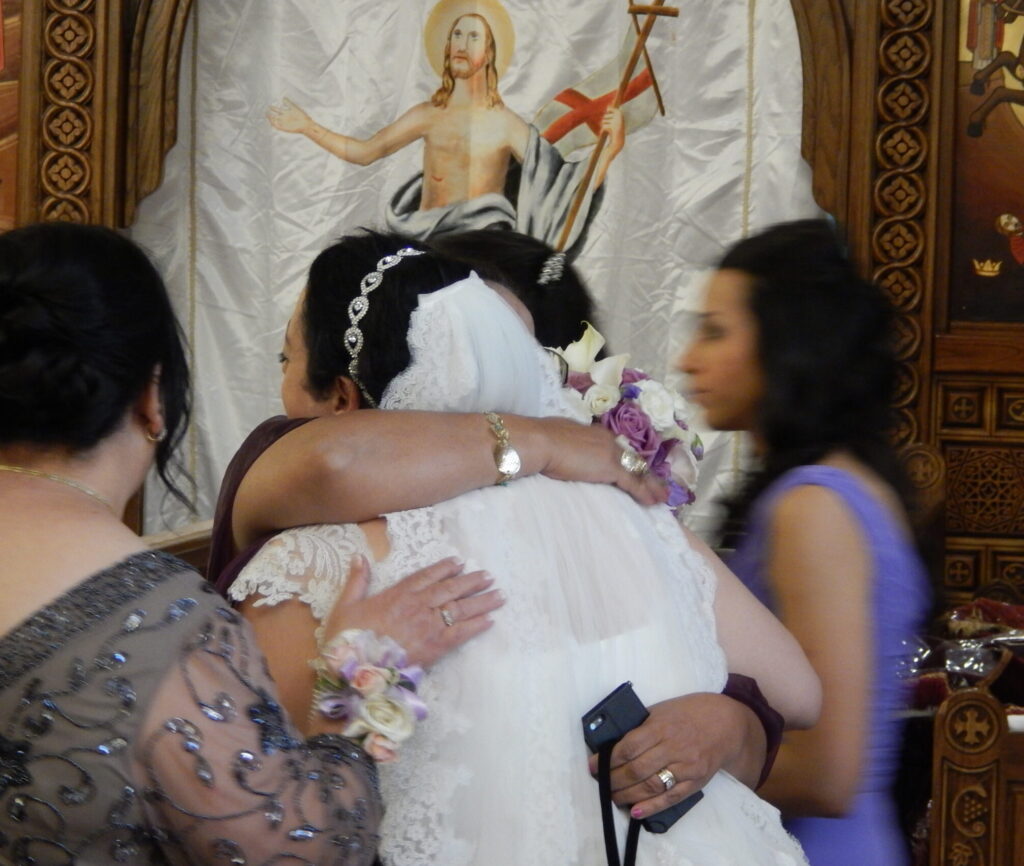
Yes, indeed. Sarah was exceptionally beautiful. Thankfully—and most importantly—she was beautiful on the inside too. The scripture passage above tells us that she was a holy woman with a gentle spirit who hoped in God, and she respected her husband as the leader of their family. I give her inner beauty a good-ol‘, Southern-fried-chicken-styled “Hallelujah” and “Praise the Lord!”
The wrong kind of beauty
Peaceful Reader, have you ever met someone who was, empirically-speaking, quite beautiful; yet his or her character or behavior made the person revolting, as in—“How fast can I get away from this nightmare?”
After Brandon and I got married, my new mother-in-law Delia made a comment about my wedding dress and said I had “chubby arms.” Charming. Our primary nickname for her was Her Majesty, the Sadistic Control Freak or Her Majesty, for short. A secondary nickname was The Beautiful Hag. Are you pickin‘ up what I’m puttin‘ down? (We learned that cute little quip from our son Logan.)
Explore this epilogue from the Sociopaths series to understand why we replaced the nicknames with what I call “no names.” It’s most interesting; I promise.
Fighting fear
What does the last phrase in the Bible passage above mean? (Being Abraham’s children if we do well and aren’t “put in fear.”) This important verse gives us the answer:
For God hath not given us the spirit of fear;
but of power, and of love, and of a sound mind.
2 Timothy 1:7, King James Version
We can’t allow fear or anxiety to take over our minds. “The spirit of fear” comes from our adversary, the devil. We must think rightly. Our thoughts must agree with God. For help with these issues, including my own stories, see Fear and Christian Living in the index.
 Let’s get back to Sarah, who left home with Abraham and traveled far into the unknown.
Sarah—virtues and strengths
1. Respected her husband; humility
2. Devoted mother
3. Holy, with a gentle spirit, faith and hope
4. Hospitality
5. Committed to Abraham and God
Think about Sarah’s list. Do you need to be more like her in one of those areas? Pray and ask God to grow that particular virtue or quality in you. Seek opportunities to practice your selected virtue or characteristic.
The hall of faith review
In part 2, we covered Abraham and Sarah’s commendations in The Hall of Faith. Let’s do a quick review today.
Abraham’s commendations
1. Responding immediately to God’s call
2. Leaving home and journeying into the unknown
3. Living as a foreigner, in tents
4. Looking forward to heaven
5. Obeying God’s command to sacrifice* his son Isaac, knowing God could raise him from the dead
*God provided a substitute sacrifice.
Sarah’s commendations
1. Receiving power to conceive and deliver a child when she was past child-bearing age
2. Considering God faithful, who made the promise
3. Looking forward to heaven
In my opinion, additional commendations are implied for Sarah. Clearly, she left home with Abraham and lived in tents, as well—steps which garnered commendations for Abraham in The Hall of Faith. Sarah walked in these steps of faith too.
Purposes
This closing section will be really short. (Don’t fall out of your chair.)
Abraham—the father of faith, and Sarah—the mother of multitudes and kings—fulfilled remarkable purposes. They give us valuable, poignant pictures of faith and devotion to the Lord. They show us that a life of faith isn’t easy, but it’s unbelievably worthwhile and impactful. They demonstrated great perseverance, faith and hope. And they began the spiritual and familial lineage of Jesus Christ—our Messiah, our King, our Savior and our Lord.
Lord God Almighty, we thank you, immensely, for Abraham and Sarah and all the valuable things their lives teach us today. Thank you for calling them, choosing them, sustaining them, loving them and commemorating them. Amen.
Coming next
The next honorees in The Hall of Faith are Isaac, Jacob and Joseph, followed by Moses’ parents. I’m not sure how far we’ll get in part 5, but I know I’ll learn a lot.
Thanks for reading and for Choosing Peace.
Closing word and song
“The Lord’s Prayer” by Kings Return
Newsletter
To stay current on recent posts, sign up for my monthly newsletter.